I am not a journalist, neither a virologist or really firm about the corona virus. What I know, is of course not more than just what others know about the recent situation. But I like to report a little bit about the daily life in Santo Domingo and the Dominican Republic. Maybe people are interested about how things are running here and what people do.
But first I would like to thank the Chinese government for the recent development. You made all that possible because of these strange eating and hygiene habits. All of our lives are potentially affected and theoretically in danger because they like to eat this weird type of animal and made medicine out of it:
Did you ever heard before of a Pangoline ?!
Whatever crank and perfidious gourmet phantasies they were trying to satisfy for themselves, now everyone turns insane because of that and freedom worldwide is or will be limited gradually. There’s no court of justice to hold China or Chinese for all of that responsible. How to sue and penalize China for that?
Probably, people worldwide will at least boycott for a few weeks the Chinese imports and low-quality Made-in-China labelled products to create at least a little backlash. I can remember the same happenings for the UK and the British Beef industry with BSE problematic decades ago. A poor consolation, but other than that there won’t be any international penalties possible. China is a too heavy and dependent player and definitely won’t take responsibility for that. Personally, I can live for a couple of months without buying new and useless plastic junk anyways.
About the Dominican way of with dealing problems
But a more interested question was for me IF people from the Dominican Republic do something. The Dominican mentality is very distinct and laid-back. I think, it could be described as the following:
“What should I care about other people’s problems? I am doing just fine, I enjoy my life and I have no worries as long as I am sufficiently supplied and have enough to eat and to drink. Gracias a Dios!”
Dominican understanding of life
A good example might be the following video:
A guy sleeping in his car with a started engine to run his A/C
This careless and maybe ignorant attitude for others and themselves is of course be put to the test when it comes to extreme situations. Situations become extreme for an individual, when they are exceptional, unforeseen and if there are no experience values to benefit from. What is even more complicated and delicate at the same time, is when these extreme situations become a collective problem.
However, the Dominican Republic is actually quite lucky when it comes to extreme situations or natural disasters. The huge earthquake was 2011 in Haiti and affected the Dominican Republic only in minor cases. All types of Caribbean tornados regularly hit other countries. The country is politically relatively stable and there aren’t any supply shortages, because the agricultural conditions of the country allow a rich variety of food. At least that’s my own perception.
Gracias a Dios!
The Dominican Republic decides more or less like a laggard
Due to its geographic and historic situation, the Dominican Republic is an ideal spot for tourism and functions as a connection anchor in Latin America. Santo Domingo (where I live at the moment) is considered as an important air hub on the American continent and has two international airports.
Santo Domingo is literally an air hub in Latin America.
And they are connecting the biggest country of the Caribbean with many other countries. Of course. Because people from these countries are planning their vacations in the Dominican Republic.
In fact, there is an extreme high dependency on other countries because these tourism reasons. The Dominican Republic waits for the customer to show a reaction before they will themselves do actions.
This laggard type of behavior slows down a country. Not to suppress the facts with the ongoing problematic with corruption. According to the World Corruption Index 2019, the Dominican Republic ranks 137 of 180. Not a surprise, that this is quite bad scoring.
Politics and bigotry is more important than collective measures to protect the population
All these reasons reflect on the situation with the handling of the Coronavirus a well. Inefficient and corrupt politicians don’t really know what to do in this case. In this emergency situation, it’s of course difficult to have a Plan B, if you don’t even have a Plan A.
But the Dominican Republic is compared to many other countries worldwide and in Latin America extremely slow and hesitating to do some actions. Other countries shut down transport systems, lock down some social structures or even recommend to limit down social activities at all. The Dominican Republic didn’t do anything so far.
Why you want to ask?
2020 is a very important election year for the Dominican Republic. On 17th of May there will be for example the general elections of the country. It’s because of that very convenient from the perspective of the running leaders of the Dominican Republic to keep the population quiet and controlled.
In times of these aforementioned extreme situations, the Dominican politicians show a lack of decision making. It would be actually the perfect moment to show some character and profile for the upcoming votes. It seems to me, that they more scared to do something wrong than make a clear statement to prepare the population for what’s about to come.
That’s exactly tomorrow! Millions of Dominican people will try to vote tomorrow again. Now that’s quite a delicate moment and situation. Suspending it again will cause protests and unrest. But holding the elections will spread the Coronavirus rapidly amongst the population.
And after the looooong introduction, I will gladly start now the actual topic of this article. The Coronavirus.
Rhinoceros iguanas (Cyclura cornuta) are a species of lizards that is primarily found in the Republic of Haiti and the Dominican Republic. I think, that these animals are very beautiful specimen and graceful beings. They don’t hunt and kill other animals, but are themselves threatened from extinction. A man-made problem, of course.
Wikipedia describes them as followed:
“Although quick to flee when attacked or threatened, they will aggressively attack by biting and repeatedly striking with their thick tail if cornered.”
Wikipedia
Well, if you ‘attack’ them with fresh fruits, they might indeed start biting. That’s exactly what I did during my excursion in the Southwest of the Dominican Republic. And I never expected that an amphibious creature as the Rhinoceros iguana could be so beautiful and graceful, but at the same time also quick and competitive when it comes to cherries 🍒
But first things first. Let me first show you, where I could find Rhinoceros iguanas in the Dominican Republic.
Where can I find Rhinoceros iguana in the Dominican Republic?
You can find them in several places all over the Hispañola island. The most stable populations can be found on Isla Beata and the Jaragua National Park. That’s exactly where I have had the joy to meet these curious animals personally.
Exactly here:
‘Laguna de Oviedo’ is a lagoon with a surface of 25 km2 (9.65 mi2). It is the second largest body of water in the Dominican Republic and due to its nearly isolated terrain in the Jaragua National Park and sparse climate conditions a perfect habitat for Rhinoceros iguanas.
They are of course not living inside of the salty water. On Laguna de Oviedo, there are 24 islands of different size and vegetation.
A satellite view from Laguna de Oviedo. The islands of the lagoon can be seen better here. Rhinoceros iguanas live on these little rocky islands Source: Wikipedia
Some of these islands offer the perfect living conditions Rhinoceros iguanas need to survive.
How do Rhinoceros iguanas get their name?
That’s a good question. Why are these animals called Rhinoceros iguanas? It doesn’t really look like they have something in common with a huge Rhinoceros from Africa.
Iguana Iguana (Parque Seminario, Guayaquil)Rhinoceros iguanas (Laguna de Oviedo)
At first glance, they appear not different to other iguanas. Wrinkled skin with a dark grey, brown and green color, a long swinging tail and flexible claw feet to move rapidly forward and climb up trees. There isn’t any obvious difference between a regular iguana and a Rhinoceros iguanas.
That’s correct and it needs a closer look to distinguish these two species from each other. It becomes quite clear when zooming into the heads of these amphibians:
Face of the Iguana IguanaFace of the Rhinoceros iguanas
The regular iguana doesn’t have on his snout anything. But on the snouts of the Rhinoceros iguanas grow and protrude these characteristic horns. That’s why they are compared with a rhinoceros, although they haven’t met each other before
Of course there are many more differences amongst the iguana species. But the horn from a Rhinoceros iguana is the most defined and special characteristic that distinguishes it from all the other iguanas.
Lo que para algunos parece normal, para otros puede ser muy inusual y podría verse como algo muy extraño lo que otros aceptaron en sus vidas como cotidiano.
La cultura es un concepto muy interesante si lo miras desde ambas perspectivas. Al igual que un gringo en la zona colonial de Santo Domingo puede apreciar todos los hermosos edificios y el antiguo espíritu europeo que encarna esta área. El mismo Gringo podría, por otro lado, estar un poco atónito y sorprendido de cómo los dominicanos viven su vida diaria de una manera normal y lo que hacen.
Me percibo como un personaje muy abierto, tolerante y curioso. No solo porque viví en varios otros países de América Latina y encontré muchas culturas emocionantes, sino porque tuve que integrarme a ellas. Pero incluso para mí, a menudo parecía sospechoso y peculiar lo que los dominicanos estaban haciendo. Y especialmente POR QUÉ lo estaban haciendo.
Este artículo está dedicado a todos los encuentros aleatorios y extraños en la Zona Colonial de Santo Domingo. Los dominicanos probablemente se aburrirán y dejarán de leer porque para ellos no es nada nuevo o especial sobre lo que estoy escribiendo, pero probablemente todos los demás estarán entretenidos debido a las historias extrañas pero auténticas que compartiré.
En este articulo aprenderás y entenderás …
Por qué Michael Jackson era en realidad el “Rey del pan” y no el “Rey del pop”
Cómo afecta la pereza dominicana el cambio climático mundial
Que no todos los souvenirs de la República Dominicana son una decoración encantadora para su mesa.
…¡y muchos más!
La pregunta más importante para ti después de leer este artículo sería:
¿Son los Dominicanos diferentes ó soy yo diferente?
What for some appears as normal, can perceive others are very unusual. On the other way around, it could be seen as very odd what others accepted in their lives as ordinary. Culture is a very interesting concept if you regard it from both perspectives. Like a Gringo in the Colonial Zone of Santo Domingo, you might cherish all the beautiful buildings and ancient European spirit that this area embodies. The same Gringo might, on the other hand, be a little flabbergasted and surprised how Dominicans live their daily life in a normal way and what they do.
I perceive myself as a very open-minded, tolerant and curious character. Not only because I lived in several other countries in Latin America and encountered many thrilling cultures I had to integrate myself. But even for me, it seemed very often suspicious and peculiar what Dominicans were doing. And especially WHY they were doing what they do.
This article is dedicated to all the random but odd encounters in the Colonial Zone of Santo Domingo. Dominicans will probably be bored and stop reading because for them it’s nothing new or special I am writing about. But everyone else will be probably well entertained because of the weird but authentic stories I will share.
To tease you a little bit: You will learn and understand…
why Michael Jackson was actually the ‘King of Bread’ and not the ‘King of Pop’
how the Dominican laziness the worldwide climate change affects
that not all souvenirs from the Dominican Republic are a lovely decoration for your cabinet
…and many more!
The biggest question for you might be after reading this article:
As some people might know, I studied “Innovation and Tourism Marketing” at the ‘Universidad Católica San Antonio de Murcia’ in the Southeast of Spain. It took almost 2.5 years for the Spanish authorities of the university and Ministry of Education to issue and submit my title correctly. But now I can proudly claim that I finally got the title from my Master’s from UCAM! But why the hell did it take so long after graduation?
Approximate reading time: 15 minutes
This review should help other interested people to find out if all the hassle after the official study was really worth it. Especially for those students who consider studying ‘Innovation and Tourism Marketing’ at UCAM in Spain. It gives authentic and detailed insights about the administrational processes, that every graduated alumnus has to face after finishing his studies. Are you planning to study Innovation and Tourism Marketing at UCAM? This article is dedicated to you, so keep on reading!
The ‘C’ in UCAM was always a mystery for us students and a good reason to gossip about the exact name. From lots of administrative calamities on a regular basis, we said very often that the ‘C’ in UCAM should be for ‘Chaotic’ instead of ‘Catholic’. That wasn’t only justified by the deserved feeling of a more than chaotic organization from our impertinent study coordinator in 2016-2017 who didn’t care about us students and acted very arbitrary and despotic. The whole administration around the university itself simply appeared for an ‘insider’ as a massive disaster and a bunch of clueless people going around in circles. No one really knew anything, cared about it, or was interested to solve a problem. Letting things slide was the name of the game.
UCAM by nightUCAM by day
For a rational arguing person and consecutive thinker, it was definitely not a joy to take classes when people were in charge who badly planned a whole study course. It wasn’t about the content of the study itself. I studied the 3rd edition of that course in 2016/2017 and once they found the right mix of subjects, it’s just a repetitive field of education. What we students learned back then about ‘Innovation and Tourism Marketing’ was quite interesting and some professors even have had a real inspirational impact on me. I still like to think back about some techniques and interesting topics I learned during the study.
Advertisements
But already the chronology of the organization to obtain a title was extremely dubious. It all started with the ceremony. If you already read that sentence and didn’t get it, I need to repeat and explain it better:
Setting goals in life is always an ambitious project. I never seriously fought to set new goals, but on the other hand I never shied away from it. After all, I successfully mastered two courses of study and at least learned to speak three foreign languages fluently. Of course, this is quite impressive and at least something to make me say, that I reached my intrapersonal targets.
But I never fulfilled these goals with a feeling of a proud achievement because I couldn’t build up any emotional level to them. Neither before reaching the goal and nor afterwards. During reaching a goal, I also perceived it as a means to an end.
Drivers license? Not needed to know how to navigate a car. Annoying social obligation for individual mobility. But I did my license anyhow for car and motorbike.
High school diploma? Was funny and joyful, but served at the end only for more qualifications.
Apprenticeship? Well, if I have to. Not a bad idea, but not a good or quaint one either.
Bachelor title? Cost a lot of time to receive at the end only a colorful certificate and nice ceremony.
Master title? Still a realistic goal to skim a bit of my own potential. Literally to do something off the cuff.
I have rarely been fed up or satisfied and have only quickly check marked the goal that has always been reached or sometimes even surpassed. The epigraph was always to hurry on and never rest on own success.
I even wanted to continue after my Master’s with a Doctor degree. But my former university in Spain artificially artificially extended the certification of my master’s degree in an unprecedented act of administrative chaos and professional inability. Hence, after three elapsed registration periods for a possible doctoral program at another university, I finally lost the desire to waste even more patience or time because of some dorks. Funny to mention at this point that I am still waiting for the official title after 2.5 years. Incredible!
Goals only exist to be accomplished. Nothing more. I was much more interested in intangible and immaterial dreams and abstract ideas. Having a dream in life is wonderful. You can color it imaginatively for yourself, always navigate onto it and enjoy it quietly and secretly without being affected by others.
A dreaming dog at a lagoon
Nobody can take away your dreams. But goals can be. It only needs one arbitrary and unprofessional decision maker or some administrational obstacles to cross your plans. These external factors can jeopardize your idea to accomplish the goal. Perhaps this was the reason why I could always build up a higher emotional level to dreams than goals. Because what is nicer than following my individual and perspective imagination of life?
Certainly not pursuing a goal and sharing a lecture hall with 100 fellow students, only to end up holding the same documentary wipe in my hands. This is more of a collective goal developed by society to create a certain claim against others. I prefer to stay with my individual dreams in me in my own hemisphere.
Of course, there are also people who advocate the exactly opposite perspective and dismiss dreams as lies. There’s nothing wrong or right about that. But if they don’t judge me, I won’t do the same.
I have often wondered how much a dream weighs. In contrast to a goal, a dream leaves a mental fingerprint and thus has a weight somewhere. The dream has to be stamped and located in a distant place in the brain and this naturally carries weight with it. A goal, on the other hand, is only achieved or not. But it has no mental burden comparable to a dream.
A baby having very active dreams
There are two dreams that I have followed and lived. One was fulfilled and the other was not. Am I physically heavier than before because of the dream came true?
Ziele im Leben zu setzen ist immer ein ambitioniertes Vorhaben. Ich habe mich nie ernsthaft um die Setzung neuer Ziele gerissen, aber auf der anderen Seite auch nie darum gescheut. Schließlich habe ich immerhin zwei Studiengänge erfolgreich mit Bravour gemeistert und immerhin drei Fremdsprachen fließend sprechen gelernt. Das kann sich natürlich durchaus sehen lassen und repräsentiert meiner Meinung nach das Erreichen von intrapersonellen Zielen.
Mich haben aber diese Ziele niemals mit Stolz erfüllt, weil ich keine Emotionalität dazu aufbauen konnte. Weder vor dem Erreichen des Ziels und danach schon gar nicht. Auch auf dem Wege dazu sah ich das Ziel eher als Mittel zum Zweck.
Führerschein? Braucht man nicht, um ein Auto lenken zu können. Lästige gesellschaftliche Pflicht zur individuellen Mobilität. Trotzdem für Auto und Motorrad gemacht.
Schulabschlüsse? War lustig und amüsant, aber diente nur der weiteren Qualifikation.
Ausbildung? Na gut, wenn es unbedingt sein muss. Keine schlechte Idee, aber auch kein ausgefallener Geistesblitz.
Bachelor? Kostete viel Zeit, brachte am Ende aber nur ein buntes Zertifikat und eine schöne Zeremonie.
Master? Ein bisschen was geht noch, kein unrealistisches Ziel. Nochmal die berühmte Schippe drauflegen und aus dem Ärmel schütteln.
Selten war ich satt oder gar zufrieden gestellt und habe das stets erreichte oder manchmal gar überflügelte Ziel schleunigst abgehakt. Hastig weiter machen wollen und nie auf einem Erfolg ausruhen war die Devise.
Ich wollte nach dem Mastertitel sogar noch einen Doktor dranhängen. Allerdings hat meine damalige Universität in Spanien in einem beispiellosen Akt an administrativem Chaos und professionellem Unvermögen die Zertifizierung meines Mastertitels derart künstlich in die Länge gezogen, dass mir nach drei verstrichenen Anmeldungsfristen für ein Doktorstudiengang irgendwann die Lust auf noch weitere Geduld, bzw. Zeitverschwendung vergangen ist. Lustig zu erwähnen an dieser Stelle, dass ich auch 2,5 Jahren nach erfolgreichem Abschluss noch immer auf den offiziellen Titel warte. Sachen gibt’s!
Ziele sind also nur da, um erreicht zu werden. Mehr aber nicht. Viel eher war ich an den immateriellen und nicht greifbaren Träumen und abstrakten Vorstellungsweisen interessiert. Einen Traum im Leben zu haben, ist etwas Wundervolles. Du kannst ihn für Dich persönlich imaginär ausmalen, Dich stets daran orientieren und ihn still und heimlich genießen.
Ein träumender Hund am Ufer einer Lagune
Träume kann Dir keiner nehmen. Ziele hingegen schon. Da muss nur irgendein Querulant von inkompetentem, bzw. willkürlichem Entscheidungsträger im Weg sein oder eine administrative Hürde und bürokratische Schikane aufgebaut werden. Schon ist das gesteckte Ziel wegen dieser externen Einflussfaktoren in Gefahr, erreicht werden zu können. Vielleicht war es dieser Grund, weshalb ich stets eine höhere Emotionalität zu Träumen als zu Zielen aufbauen konnte. Denn was ist schöner als meiner individuellen und perspektivischen Vorstellung zu folgen?
Mit Sicherheit keinem Ziel hinterherzuhecheln und sich mit 100 Kommilitonen einen Vorlesungssaal zu teilen, nur um am Ende den gleichen dokumentarischen Wisch in den Händen zu halten. Das ist eher ein kollektives und von der Gesellschaft entwickeltes Ziel um ein gewisses Anspruchsdenken zu entwickeln und indoktrinieren. Da bleibe ich lieber bei meinen individuellen Träumen vor meinem geistigen Auge.
Es gibt natürlich auch Menschen, die die exakt andere Sichtweise verfechten und Träume als Schäume abtun. Ist weder verkehrt, noch korrekt. Aber: “Jeder Jeck ist anders” wie der besoffene Kölner an Karneval grölt.
Ich habe mich oft gefragt, wie viel ein Traum wiegt. Im Gegensatz zu einem Ziel hinterlässt ein Traum irgendwo einen mentalen Fingerabdruck und damit Gewicht. Der Traum muss irgendwo im Gehirn abgestempelt und lokalisiert werden und das trägt natürlich naturgegeben Gewicht mit sich. Ein Ziel hingegen wird lediglich erfüllt oder auch nicht. Aber es besitzt keine vergleichbare mentale Last wie ein Traum.
Ein Baby träumt während seiner sehr aktiven Nachtruhe
Es gibt zwei Träume, die ich verfolgt und gelebt habe. Anhand diesen beiden Beispielen möchte ich dezidiert versinnbildlichen, was den Traum ihn mir ausgelöst und was er in mir bewirkt hat. Der eine Traum hat sich erfüllt und der andere nicht. Bin ich durch den in Erfüllung gegangenen Traum nun physikalisch schwerer geworden als vorher?
Fijar metas en la vida es siempre un proyecto ambicioso. Nunca luché seriamente para establecer nuevas metas, pero por otro lado, nunca lo evité. Después de todo, obtuve con éxito dos diplomas de estudios y aprendí a hablar al menos tres idiomas extranjeros con fluidez. Por supuesto, esto es bastante impresionante y al menos algo para decirme a mi mismo que alcancé mis objetivos individuales.
Sin embargo nunca sentí orgullo por haber alcanzado estos objetivos porque no pude construir ningún nivel emocional con respecto a ellos . Ni antes de llegar a la meta ni después. El proceso de alcanzar un objetivo, también lo percibí como un medio para un fin.
¿Licencia de conducir? No es necesario saber cómo conducir un automóvil. Es solo una fastidiosa obligación social para poder transportarse individualmente. De todos modos la obtuve para auto y moto.
¿Diploma de escuela secundaria? Fue divertido y alegre, pero sirvió al final sólo de requisito para poder continuar otros estudios .
¿Aprendizaje? Bueno, si tengo que hacerlo. No es una mala idea, pero tampoco es buena o pintoresca.
¿Título de bachillerato? Cuesta mucho tiempo por recibir al final solo un certificado colorido y una bonita ceremonia.
¿Título de Master?Sigue siendo un objetivo realista para aprovechar un poco mi propio potencial. Literalmente para hacer algo fuera del alcance.
Raramente me harto o estoy satisfecho y solo he marcado rápidamente el objetivo que siempre se ha alcanzado o, a veces, incluso superado. El epígrafe siempre fue apurarse y nunca descansar en el propio éxito.
Incluso quería continuar después de mi maestría con un doctorado Pero mi antigua universidad en España extendió artificialmente el proceso de la certificación de mi maestría en un acto de caos administrativo e incapacidad profesional inolvidable en mi vida. Por lo tanto, después de tres períodos transcurridos de registro para un posible programa de doctorado en otra universidad, finalmente perdí el deseo de perder aún más paciencia o tiempo debido a algunos burros. Es curioso mencionar en este punto que todavía estoy esperando el título oficial después de 2.5 años. ¡Increíble!
Las metas sólo existen para ser alcanzadas. Nada más. Estaba mucho más interesado en sueños intangibles e inmateriales e ideas abstractas. Tener un sueño en la vida es maravilloso. Puedes colorearlo imaginativamente para ti mismo, siempre conducirte hacia él y disfrútalo en silencio y en secreto sin que otros te afecten.
Un perro soñando en una laguna
Nadie puede quitarte tus sueños. Pero los objetivos pueden hacerlo. Sólo necesitas un arbitrario y poco profesional tomador de decisiones o algunos obstáculos administrativos para cambiar tus planes. Estos factores externos pueden poner en peligro tu idea para lograr el objetivo. Quizás esta fue la razón por la que siempre pude construir un nivel emocional más alto para los sueños que para los objetivos. Porque, ¿qué es más agradable que seguir mi imaginación y perspectiva individual de la vida?
Ciertamente, no perseguir una meta y compartir una sala de conferencias con 100 compañeros, solo para terminar sosteniendo la misma limpieza documental en mis manos. Este es más un objetivo colectivo desarrollado por la sociedad para crear un cierto reclamo contra los otros. Prefiero quedarme con mis sueños individuales en mí, en mi propio hemisferio.
Por supuesto, también hay personas que defienden la perspectiva exactamente opuesta y descartan los sueños como mentiras. No hay nada correcto o incorrecto al respecto o correcto en eso. Pero si ellos no me juzgan, yo no haré lo mismo.
A menudo me he preguntado cuánto pesa un sueño. En contraste con un objetivo, un sueño deja una huella mental y, por lo tanto, tiene un peso en alguna parte. El sueño tiene que ser estampado y ubicado en un lugar distante del cerebro y esto, naturalmente, conlleva peso. Un objetivo, por otro lado, solo se logra o no. Pero no tiene una carga mental comparable a un sueño.
Un bebé sueña activamente mientras esta durmiendo
Hay dos sueños que he seguido y vivido. Uno se cumplió y el otro no. ¿Soy físicamente más pesado que antes porque el sueño se hizo realidad?
Whenever you hear about carnival, you might imagine the beautiful Samba dancing women in Brazil with their colorful costumes during mile-long parades. But carnival in not only an exclusive Brazilian invention. In fact, this festivity has religious roots and is celebrated in many catholic countries all over the world. And within the countries, even amongst different geographical regions or even cities very distinct interpretations and variations of carnival can happen. But how do people celebrate carnival in the Dominican Republic? Is there carnival in the Colonial Zone of Santo Domingo?
The Dominican Carnival is in comparison to other countries not an event that happens for one week. In various provinces of the Dominican Republic, carnival is celebrated during all weekends in February. You can be sure, that if you are traveling through the Dominican Republic in February and are interested in going to the bigger Dominican cities, that there will be a lot of ballyhoo at the weekends.
What I remembered from my time in Peru is the difference between the capital city and the Peruvian provinces in terms of cultural expressions, activities and religious festivities. In 2018, I have had the chance to take part of a very strange dubious Peruvian concept of carnival in Lima:
What do you think, when you hear the word ‘carnival’? But apart from all the Brazilian Samba carnival we imagine, there are several other places in the world where people celebrate carnival.
Read this blog article to find out more about the peculiar Peruvian way to celebrate Carnaval. Yes, written and pronounced with an ‘a’.
I called Lima in one of my older articles the ‘least Peruvian city’, because these type of interesting happenings were rarely. That’s almost the same for the Dominican Republic. You can discover ‘the real Dominican Republic’ out of the capital city of Santo Domingo. All sorts of cultural festivities usually take place in the provinces and other cities.
Thus, I was kind of surprised to see, that there is a carnival in Santo Domingo AND in the Colonial Zone. You would actually expect from the oldest city on the American continent in a strictly religious city some kind of dedication to carnival. But the parade I visited on February 22 in 2020 in the Zona Colonial was in fact the first edition of its kind.
The First City of the Americas, home of the first Viceroyalty of the New World, will be filled with culture, talent and music with the staging of a colorful parade of troupes and characters, to the delight of the public. The Viceroyalty Carnival of the Colonial City seeks to arouse interest in history, cultural heritage and traditions. It is organized by the Pan American Round Table of the Colonial City and the Tourism Cluster, with the sponsorship of the Ministry of Tourism and Culture. Governor Nicolás de Ovando, Viceroy María de Toledo and Viceroy Diego Colón, accompanied by their court, Buffoon and a troupe that will pay homage to a Dominican painter, will lead the parade.
godominicanrepublic.com
For me on the first glance interesting to note, that apparently there is no connection at all to the Catholic religion. Instead, it gives more the impression to be announced as a historic masquerade ball. Especially the teaser picture reminded me somehow to the ancient traditional carnival from Venice in Italy:
As always, (valid) information are very difficult to obtain in the Dominican Republic. This concerns all sectors, but especially when you’re looking to find out something about an organized festival. Information usually spread in this country by hearsay and aren’t barely communicated electronically. It was for me even difficult to find out any background information about that festival. There isn’t any website to read a bit more about it. Simply couldn’t tell, which edition it is. According to Instagram Hastag #carnavalvirreinal the first picture was uploaded on March 10, 2018 by stodhohotels. I guess, that’s the 3rd edition of the Viceroyalty carnival of the Colonial City in Santo Domingo.
I was definitely curious about how they want to interpret carnival and if the predicate “Carnival” was even vindicated. So let’s find out!
And the parade is really sweet. Probably the shortest carnival parade of the world:
They were marching through a few streets of Santo Domingo’s Colonial Zone and then ended up at Parque Colón, the central square of the city where for example the first cathedral of the is Americas is located.
At the end of the convoy it was quite mixed and it seemed to me that everyone could join and participate. That was quite fun so I decided to join the people:
Many little horse-drawn carriages carried some probably important personalties through the streets of the Zona Colonial. They all seemed to very very happy not having to walk all the way:
Who could afford more than just one horsepower came directly with a motorized vehicle to drive the way:
The prestigous Hotel Billini from the Colonial Zone came with their tiny little transportation vehicle
Those who weren’t equipped with horses or cars have had to walk through the Colonial Zone. Especially the walking orchestra did quite a good workout walking all way AND holding and playing their instruments.
The ‘avant-garde’ of the parade
Especially the infant group was happy and proud to take part at the carnival in the Colonial Zone
These kids represented the mini-dwarfs
One of my favored costumes: The giant dwarf
As mostly during events in the Dominican Republic, it can get quite messy and maybe even chaotic. Same happened when I had to stop where I stood at the end of the video and had to wait for minutes. No one was moving forward and a little congestion was created. That’s why I decided to brake out of the convoy and go behind the stage.
Life as a giant dwarf is hard: He simply needed to take a rest after walking the streets on stilts.Some happy women in their colorful dresses during the Viceroyalty carnival at Plaza Colón
Another funny thing was, that the show officially started and the stage wasn’t even ready and still needed some preparation:
A perfect example for the Dominican comprehension of ‘Just in Time’
That’s why the sound was at the beginning not the best quality and very quite. It was almost not possible to hear what the woman and the man were saying:
From the little bit I understood, they crowned the new king of the Dominican Republic. And he hold a very funny inauguration speech (in Spanish):
All in all, I must say that this tiny parade was funny to watch, had no religious touch and was not as royal as I expected. Okay, I mean there were the horse-drawn carriages transporting some very important people of high degree. But compared to the dress of the promotional picture, the old king looked a bit more royal than the new king:
That’s how the Colonial Zone interpreted their understanding of a Carnival. I hope to have given some interesting insights into the young carnival culture of Santo Domingo. And that you liked my article. If so and you would like to never miss an update in the future, please subscribe to this blog and follow it on Social Media!
I like water and water activities. But I prefer fresh water rather than saltwater. There is a very beautiful construction very close to Sabana de la Mar in the south of Samaná Bay. It’s called Paraíso Caño Hondo and has very inviting installments to discover. Especially the natural waterpark opens up a lot of fun activities for the visitor. I have had a great time there and was surprised, how ample and detailed at the same time Paraíso Caño Hondo was constructed.
Caño Hondo can be found inside of the biggest national park of the Dominican Republic, ‘Parque Los Haitises’. It is a constructed eco hotel with a big natural waterpark.
It’s approximately 9 kilometers (5.5 miles) away from the next bigger city called Sabana de la Mar. That will take more or less 30 minutes.
30 minutes for that little bit of distance? Yes, I was surprised as well, that it took so long to get to Paraíso Caño Hondo. Bad road conditions might explain the reason why. You better go there with a SUV or Jeep, alternatively with a stable motorbike.
One good thing about the Dominican Republic is, that it has much more things to offer than just beaches and seasides. Especially waterfalls are scattered across the whole country. But what makes these waterfalls in the Dominican Republic especially interesting is that they are rather neglected from the local population. They prefer to spend their free time at the beaches than in the mountains where waterfalls can be found. Both attention and references on- and offline about them are rather low. It’s not easy to obtain information about these places. Best thing is to discover themself. And that’s what I did. I visited Salto de Yanigua – A rather secret waterfall in the Hato Mayor province.
I usually show maps of the location to show where to find my visited destination. This one is rather difficult to map – Because there are two ‘Salto de Yanigua’ on Google Maps.
So which one to chose? I checked the metadata from my taken photos to locate the GPS position. There’s nothing more reliable than that in terms of finding out where you are or were. Also Google Maps entries can be wrong – As you saw in this example with the double entry. So whom to trust?
Literally inside of the waterfall!
I recorded this video literally from the inside of the waterfall. You can’t be any closer than that. You can find Salto de Yanigua with the following GPS coordinates:
Latitude: 18° 58′ 18.864″ N
Longitude: 69° 26′ 29.568″ W
Did you know, that you can also search in Google Maps after GPS coordinates? If I use the ones from above, I’ll end up here:
The good news is, that the red dot on the map is with the coordinates 100% exact. The bad news is, that both entries from before are therefore wrong. Even the closer one in the middle with grey color is approximately 100 meters away from Salto de Yanigua.
Eines der Dinge an der Dominikanischen Republik, das ich am meisten schätze, ist die natürliche Vielfalt des Landes. Es gibt nicht nur Strände zu bieten, sondern noch viele weitere spannende Ausflugsziele im Landesinneren. Insbesondere Wasserfälle sind nahezu überall auf der Insel verstreut. Die Wasserfälle in der Dominikanischen Republik sind sehr interessant, weil sie aus der Sicht der internationalen Reisenden kaum bekannt sind und kommuniziert werden. Ganz besonders spannend ist der Wasserfall Salto de Yanigua – Ein geheimer Wasserfall in Hato Mayor. Was ich dort erleben durfte und ob sich ein Besuch dort lohnt, könnt ihr in diesem Artikel nachlesen.
Would you like to read this article in another language?
Die Dominikaner gelten als eher gemächliches Volk und verbringen auch viel lieber Zeit an ihren Stränden als in den Bergen. Sowohl Aufmerksamkeit als auch Referenzen zu Wasserfällen on- und offline sind eher gering. So ist es auch diesmal mit dem Wasserfall, den ich heute vorstellen möchte. Der Wasserfall ‘Salto de Yanigua’ ist ebenfalls einer dieser geheimen und versteckten Wasserfälle in der Dominikanischen Republik über den nur wenig bekannt ist. So gibt es z.B. keine validen Informationsquellen auf Deutsch und Englisch. Auch genügen die wenigen Informationen in spanischer Sprache kaum zur minutiösen Reiseplanung.
Manchmal ist es das beste, Dinge selber in die Hand zu nehmen und zu erkunden. Das habe ich getan, Salto de Yanigua in der Provinz Hato Mayor besucht und möchte somit ein wenig Pionierarbeit für andere Reisende sowohl in deutscher als auch in englischer Sprache leisten.
Wo ist Salto de Yanigua?
Normalerweise zeige ich immer gerne bei Artikeln zu Ausflügen auf meinem Blog, wo genau das Ziel auf der Karte zu lokalisieren ist. Dieses Mal war es einwenig schwieriger mit der exakten Bestimmung. Weil es zwei verschiedene Einträge für Salto de Yanigua bei Google Maps gibt.
Also – Zu welchem der beiden Ziele möchten wir fahren? Zum Glück speichert meine GoPro Hero 7 bei der Fotoaufnahme die GPS-Daten des jeweiligen Bildes. Es gibt nichts verlässlicheres als diese Informationen zur exakten Ortsbestimmung. Denn auch die Einträge bei Google Maps können fehlerhaft sein – Wie sich in dem Beispiel mit den doppelten Einträgen gezeigt hat. Also welchem von beiden Orten vertrauen?
Hier bin ich wortwörtlich IM Wasserfall Salto de Yanigua
Dieses Video habe ich buchstäblich IM Wasserfall Salto de Yanigua aufgezeichnet. Noch näher an der eigentlichen Position zu sein geht fast gar nicht. Salto de Yanigua kann also mit den folgenden GPS-Positionen aufgespürt werden:
Längengrad: 18° 58′ 18.864″ N
Breitengrad: 69° 26′ 29.568″ W
Wusstest Du, dass es ebenfalls möglich ist, bei Google Maps nach den GPS Koordinaten zu suchen? Wenn ich die Koordinaten von oben gebrauche, dann lande ich exakt hier:
Die guten Nachrichten sind, dass der rote Punkt auf der Karte die Koordinaten zu 100% exakt widerspiegelt. Die schlechten Nachrichten sind, dass beide Einträge zuvor bei Google Maps falsch sind. Selbst der näher positionierte graue Punkt in der Mitte ist noch ca. 100 Meter vom Salto de Yanigua entfernt.
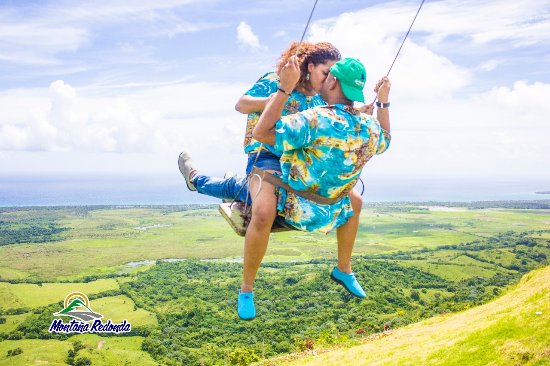
Montaña Redonda is one of the most sold excursions in the Dominican Republic. With about 1.5 hours distance and a close proximity to Punta Cana, many full tourist buses arrive there and transport a lot of visitors to the top of the mountain.
The name describes nothing more than a ’round mountain’. And it’s true! From there, you have a stunning 360° view to the adjacent valleys and can enjoy nature at it’s best. Thanks to the perfect sights, there are some funny and beautiful motives for photographers possible:
Definitely worth a visit, huh!? I thought the same and wanted to do the same excursion. But of course on my own initiative and not as part of an overpriced tourist bus from Punta Cana.
I visited this place on the same day directly after my trip to Laguna Redonda:
If you are familiar with tourism in the Dominican Republic and like to travel, you probably have heard already of Montaña Redonda. This is a famous tourism excursion on the top of a hilly area where you have a stunning 360 degrees with to the adjacent valleys. But have you ever heard about the little…
First thing to say is, that you definitely need a SUV or Jeep. Something really powerful, because the way to the top of the mountain is in extreme bad condition and very narrow.
This was after passing the entrance. And the surface got much worse than that!
The admission is with 200 Peso (4 USD) quite cheap. Guided tours from Punta Cana start at Trip Advisor from 70 USD. Wow!
I would recommend to go of course off-season (MAR – DEC) and avoid if possible the high season (JAN + FEB and Easter/Christmas holidays). You’ll have definitely a better experience alone without a ton of strangers. next to that, also the way is a bit safer. If a car or bus is coming down while you plan to drive up or vice versa, it can be extremely challenging to pass each other. Highly advanced driving skills are more than necessary and welcome!
Bad weather conditions at Montaña Redonda
During climbing up the round mountain with the jeep, the weather conditions got really bad. It started to rain and dense cloud band came from the Atlantic side to the island. Unfortunately, my experiences were a little bit different, when I arrived on top of the mountain:
We parked not at the parking space, but directly on top of the mountain. At least no one complained about that 🙂
Well…As you can see, there wasn’t any 360° view possible. I had literally a 0° view, because the clouds were all over the place. No idea, where the meteorological difference between a cloud and fog is. But it felt, that I had both of it.
I’m pretty sure, that it’s actually a nice place, ignoring the weather conditions.
The only shelter a visitor can find on top of the mountain is a little shack in the middle of the plateau.
No real shelter possible: The only shack on top of the mountain has, of course, no walls. Rain and wind entered from all sites and made me wet anyways.
It didn’t really matter anymore to look for cover or not. At the end, I was completely soaked of water anyway.
Let’s make the best out of Montaña Redonda!
So why not making the best of it and at least pretending having a good time? 🙂
Easier said than done, but I tried to have the same amount of fun and happiness as people during a clear day. For example with…
The hammock at Montaña Redonda
Could’ve been a wonderful photo without the water drop on the lens AND with a clear view!
How it actually looks like!
The broom at Montaña Redonda
Also this optical illusion didn’t really work out for me!
How it actually looks like!
The swing at Montaña Redonda
What a beautiful view…
How it actually looks!
Let’s make the best out of it and swing!
Never give up mentality!
Advertisements
Montaña Redonda is a beautiful tourism destination, I suppose…?!
Needless to say, that you barely can make the way back, because you don’t like it there anymore. So my girlfriend and me waited for two hours, hoping for a better view. And we got ALMOST rewarded for that patience. The sky brightened up for a little bit and offered a little view through the dense cloudscape…
There was a little hope for a few minutes – But I was waiting in vain for a better view
Please give me at least a bit of a clear view…
…but that was nothing more than just 5 short minutes. Well, at least we tried it! I think, that Montaña Redonda can be a really beautiful tourism destination with a little bit of luck!
Enough space and possibilities to enjoy the view!
A memorable experience at Montaña Redonda (the round mountain) in the Dominican Republic.
It was definitely an adventure to get up. But in the late afternoon and with the bad vision, rain and muddy surface it was a challenge to get down as well. I’m very glad, that nothing bad happened during the way down and that we arrived safe and secure. But there is one announcement I want to bring up to Montaña Redonda:
Santo Domingo Pop es un festival sobre … Bueno, la cultura pop, supongo. Para jóvenes, familias, con muchos colores, varias oportunidades para comer rico y muchos artistas dominicanos locales de literatura, música, teatro, danza y trabajo artesanal. La edición 2020 participó en el jardín botánico de Santo Domingo y fue el mejor festival de la ciudad que he visitado hasta ahora.
En un artículo anterior en mi blog describí que hay una falta en Santo Domingo con respecto al entretenimiento. Estos “problemas de entretenimiento” hacen que la vida en la capital de la República Dominicana no sea tan interesante como en muchas otras ciudades latinoamericanas.
La Poesía de la vida – Lema del festival Santo Domingo Pop 2020
Pero el festival Santo Domingo Pop es una gran excepción de esa regla. He visitado antes algunos otros festivales en la capital. Este fue, por mucho, el festival más hermoso, mejor organizado y agradable que he visitado en Santo Domingo.
Creo que puedes tener una buena impresión de todo el festival si miras la película posterior que creé:
¿Dónde está el festival Santo Domingo Pop?
En una zona bonita, el jardín botánico nacional. Donde hay suficiente espacio para descubrir cosas coloridas y extrañas durante todo el día.
El festival fue el sábado y domingo, 1 y 2 de febrero. Comenzó a las 3pm y la pasé muy bien allí.
Entrada del festival Santo Domingo Pop
Elegí ir allí el domingo por la tarde para evitar los tapones más grandes. Santo Domingo es una ciudad, donde siempre hay tránsito. Eso hace que sea bastante difícil de ir de A a B.Un taxi en UBER no cuesta más de 230 Pesos (4 USD) desde la zona colonial.
Pensé que con la admisión también tendría entrada al jardín botánico. Visité el jardín botánico antes y realmente me gustó el esfuerzo y la dedicación que pusieron en esta área. Es un lugar tranquilo y pacífico, tal vez debería escribir otro artículo sobre el jardin botanico algún día.
De todos modos: el festival se celebró en un área limitada muy cerca de la entrada principal. Solo desde mi perspectiva personal, debo decir que un poco de espiritu y libertad se perdieron cuando me di cuenta de que estaba atrapado entre vallas.
Advertisements
¿Cuánto cuesta Santo Domingo Pop?
Uff, no es muy barato. Llamémoslo así. Pero estos altos costos justifican y garantizan un buen festival. Haz clic y mira las imágenes a continuación para ver las diferentes entradas para Santo Domingo Pop:
Costos para la admisión al festival Santo Domingo Pop:
Adultos: 700 DOP (13 USD)
Niños: 300 DOP (5,50 USD)
Combo 1 – Dos adultos y un niño: 1.545 DOP (28.70 USD)
Combo 2 – Dos adultos y dos niños: 1.818 DOP (33.75 USD)
Combo 3 – Dos adultos y tres niños: 2.091 DOP (38.80 USD)
Combo 4 – Un adulto y tres niños: 1.455 DOP (27 USD)
Combo 5 – Cuatro adultos: 2.545 DOP (47.20 USD)
¿Qué comer en Santo Domingo Pop?
Como un viajero feliz con su comida especial, debo decir que había mucha variedad para el visitante. Por supuesto, no pude probarlo todo. Mi presupuesto financiero y calórico del día no me permitieron probar toda la excelente comida, snacks y postres. Pero aquí hay algunos de los mejores bocadillos que pude encontrar:
Empanadas de ‘La Empanadaria’ @ Santo Domingo Pop 2020 festival
Queso con empanada @ Santo Domingo Pop 2020
Wallys Burgers
¡Mi heladería favorita de la República Dominicana ‘Valentino’ se expandió y ahora también ofrece batidos!
Un sorbete sabroso y afrutado de Valentino @ Santo Domingo Pop 2020
Las resoluciones de mi año nuevo todavía están en progreso 🙂
Afortunadamente, puedo informar que definitivamente como menos carne que el año pasado. Por lo tanto, también probé la comida vegetariana que pude encontrar en Santo Domingo Pop.
Que hacer en el festival Santo Domingo Pop?
Como se puede imaginar, había muchísimas familias con niños. Por lo tanto, la mayoría de las actividades que podía realizar durante el festival se adaptaron a los intereses de la generación más joven.
Pero especialmente las áreas de picnic y relax estaban bellamente decoradas. Se dio suficiente espacio para que todos pudieran encontrar una mesa o una alfombra de picnic. Y afortunadamente, había suficiente somb. Habían 30 grados durante un domingo bastante caluroso.
Area bonita para hacer picnic @ Santo Domingo Pop 2020
Lo que realmente me gustó del festival Santo Domingo Pop 2020
Bien, ya no soy un niño. Tal vez algunas veces. Pero estas actividades para niños no eran lo que me interesaba.
Todo lo que tenía el toque artesanal y especial despertó mi interés. Pero lo que realmente me gustó del festival pop de Santo Domingo fue un stand innovador.
En mi opinion eso estaba el stand mejor: Atabey con sus guitarras recicladas
Estas personas de Atabey reciclan cosas y fabrican guitarras. No solo, que estas guitarras realmente funcionan, también tocaron algunas canciones con ellas. ¡Y no sonó para nada mal!
No estoy seguro, si estas guitarras también estaban a la venta, ¿pero supongo? Sin embargo, me hicieron pensar en estos vaqueros y hillbillies que tocan canciones country en sus banjos creados por ellos mismos. ¡La imaginación melancólica de la infancia se hizo realidad!
Advertisements
Lo que no me gustó del festival Santo Domingo Pop 2020
Lo que personalmente no me gustó fue la oportunidad perdida de salir del área del festival y volver a entrar. Desafortunadamente, no has tenido la oportunidad de volver a entrar una vez que dejaste el jardín botánico. Eso es algo raro, porque la mayoría de los festivales que he visitado te permiten volver a entrar.
Otra cosa que realmente no entendí fue la exposición del zoológico local. El “Parque Zoológico Nacional” de Santo Domingo vino a presentarse y despertar el interés de los visitantes. Por supuesto, un zoológico solo puede ser interesante y convincente, si muestran algunos animales. Y realmente hicieron eso, pero no de una manera agradable:
El zoológico de Santo Domingo también exhibió sus animales en el festival Santo Domingo Pop
Parque Zoológico Nacional
Erizo de tierra @ Santo Domingo Pop festival
Una culebra @ Santo Domingo Pop 2020
Un poco contradictorio: educar a los niños sobre la libertad de los animales y exponerlos en jaulas. Realmente no encajaba con el espíritu libre del festival.
Personalmente, no vi realmente el ajuste de toda esta colaboración. Primero, tu como visitante no puedes traer tus propias mascotas al festival. ¡Política estricta!
Pero, por otro lado, algunos animales salvajes se exhiben en jaulas, cajas o compuestos demasiado pequeños. Independientemente de decir, que estos animales salvajes se mantienen en el zoológico para simular su hábitat. Si bien esto es de todos modos un manejo inapropiado, se toman de su biosfera artificial con la que se familiarizaron durante años para mostrarse en un entorno mucho más pequeño.
El contacto más cercano con el visitante, los ruidos más fuertes, el impacto directo del sol y todo el transporte de los animales deben haberlos estresado. Todo esto realmente no encajaba con el mantra de los festivales de ser un festival de artes libres al aire libre, si los animales son capturados en jaulas.
¿Vale la pena ir al festival Santo Domingo Pop?
En mi opinión, definitivamente sí. El festival combina muchas actividades interesantes y se dirige a varios grupos objetivo. Ya sea que vengas con tus hijos para que se diviertan en la amplia área o quieras disfrutar bailando con amigos música electrónica durante uno de los muchos espectáculos, definitivamente vale la pena visitar Santo Pop Pop. La admisión parece un poco caro, pero calidad tiene su precio y se le prometerá al visitante un festival realmente bien organizado.
Santo Domingo Pop 2020 festival
Un gran gracias a Karol Medina Díaz de Tres Media que me ayudaba con la admisión al festival!
Santo Domingo Pop is a festival about…Well, the pop culture I suppose. Young, for families, colorful, lots of opportunities to have a bite and many local Dominican artists of literature, music, theater, dance and artesian work. The 2020 edition took part in the botanic garden of Santo Domingo and was by far the best festival of the city I attended so far.
La Poesía de la vida – Lema del festival Santo Domingo Pop 2020
In a former article on my blog I described, that there is a lack in Santo Domingo regarding entertainment. These so called ‘entertainment problems’ make the life in the capital of the Dominican Republic not as interesting as in many other Latin-American cities.
The official newspaper from the Santo Domingo Pop 2020 festival came on recycling paper – Good idea!
But the Santo Domingo Pop festival is a great exception. I’ve visited before some other festivals. This was by far the most beautiful, best organized and pleasant festival I’ve been in Santo Domingo.
Where is the Santo Domingo Pop festival?
In a beautiful area – the national botanic garden – there is enough space to discover the colorful and odd things throughout the whole day.
The festival was held Saturday and Sunday, February 1 and 2. It started at 3pm and I had a really great time there.
Selfie time!
I chose to go there on the Sunday afternoon to avoid the biggest traffic jams. Santo Domingo is a city, where there is always traffic. That makes it quite difficult to get from A to B. A taxi by UBER cost not more than 230 Pesos (4 USD)
First I thought, that I would have with the admission as well entrance to the botanic garden. I visited the botanic garden and really liked the effort and dedication they put into this area. It’s a quiet and peaceful place, maybe I should write another article about it one day.
I think, that you can get a good impression of the whole festival, if you watch the after movie which I created:
Anyway: The festival was held in a fenced area very close to the main entrance. Just from my personal perspective, I need to say, that a little flair and freedom got lost when you realized that you are captured between fences.
Building a fence behind a fence? Good idea!
Too many fences and borders at the festival
Advertisements
How much does Santo Domingo Pop costs?
Uff, it’s not too cheap. Let’s call it like that. But these high costs justify a good festival. Click and check the images below to see the different tickets for Santo Domingo Pop:
Adults – 700 Pesos
(Santo Domingo Pop tickets)
Children – 300 Pesos
(Santo Domingo Pop tickets)
Family Combo 3 – 1.545 Pesos
(Santo Domingo Pop tickets)
Family Combo 2 – 1.818 Pesos
(Santo Domingo Pop tickets)
Family Combo 3 – 2.091 Pesos
(Santo Domingo Pop tickets)
Combo 1 – 1.455 Pesos
(Santo Domingo Pop tickets)
Combo 2 – 2.545 Pesos
(Santo Domingo Pop tickets)
Costs for the admission to the Santo Domingo Pop festival:
Adults: 700 DOP (13 USD)
Children: 300 DOP (5,50 USD)
Combo 1 – Two adults and one child: 1.545 DOP (28.70 USD)
Combo 2 – Two adults and two children: 1.818 DOP (33.75 USD)
Combo 3 – Two adults and three children: 2.091 DOP (38.80 USD)
Combo 4 – One adult and three children: 1.455 DOP (27 USD)
Combo 5 – Four adults: 2.545 DOP (47.20 USD)
What to eat at Santo Domingo Pop?
As a happy food traveler, I must say that there was a lot of variety for the visitor. Of course I couldn’t try it all. My financial and caloric budget per day didn’t allow me to taste all of the great food, snacks and desert. But here are a few of the best munchies I could find:
Empanadas from ‘La Empanadaria’ @ Santo Domingo Pop 2020 festival
A cheesy empanada @ Santo Domingo Pop 2020
Wallys Burgers
My favorite Dominican ice cream dealer ‘Valentino’ expanded and now offers also Shakes!
A tasty and fruity sorbet from Valentino @ Santo Domingo Pop 2020
My new years resolutions are still in progress 🙂 Luckily I can report that I eat definitely less meat than last year. Hence I also tried the vegetarian food I could find at Santo Domingo Pop.
What to do at the Santo Domingo Pop festival
As you can imagine, there were a loooooot of families with children. Hence, the most of the activities you could do during the festival was adapted to the interests of the youngest generation.
Kids Zone at the Santo Domingo Pop festival 2020
Pumping up some clown baloons @ Santo Domingo Pop 2020
Santo Domingo Pop 2020, Chill Area
But especially the picnic and chill areas were beautifully decorated. Enough space was given for everyone to find a table or picnic rug. And luckily, there was enough shade to find. It was with 30 degrees Celsius quite a hot Sunday.
Beautiful arranged picknick area @ Santo Domingo Pop 2020
What I really liked about the Santo Domingo Pop 2020 festival
Okay, I’m not a child anymore. Maybe sometimes. But these activities for children were not what I was deeply interested in.
Everything that had the artesian and handcrafted touch gathered my interest. But what I really liked about the Santo Domingo Pop festival was especially one booth.
One of my favorite exhibitions: Recycled guitars
These people from Atabey recycle things and fabricate guitars. Not only, that these guitars actually work, they also played some songs with them. And it sounded not too bad!
Not sure, if these guitars were also for sale, but I suppose?! Nevertheless, they made me think about these cowboys and hillbillies who play country songs on their self created banjos. Melancholic childhood imaginations came true!
What I didn’t like about the Santo Domingo Pop2020 festival
Advertisements
What I personally didn’t really like was the missing opportunity to exit the festival area and get back in. Unfortunately, you haven’t had any chance to reenter, once you left the botanic garden. That’s something unusual, because the majority of festivals I’ve visited allow you to reenter again.
Another thing I really didn’t comprehend was the exhibition of the local zoo. The ‘Parque Zoologico Nacional’ of Santo Domingo came to present themselves and gather some interest from the visitors. Of course a zoo can only be interesting and convincing, if they show some animals. And they really did that, but not in a pleasant manner:
The local zoo of Santo Domingo also exhibited their animals at the Santo Domingo Pop festival
Parque Zoológico Nacional (The national zoo) hat a booth at Santo Domingo Pop as well and brought some animals
Erizo de tierra @ Santo Domingo Pop festival
A snake @ Santo Domingo Pop 2020 from the local zoo
A little contradictory: Education children about the freedom of the animals and exhibiting them in cages. Didn’t really fit the free spirit of the festival.
I personally didn’t really see the fit of this whole collaboration. First, you as a visitor are not allowed to bring your own pets to the festival. Strict guideline policy!
But on the other hand, some wild animals are exhibited in far too little cages, boxes or compounds. Regardless to say, that these wild animals are held in the zoo to simulate their habitat. While this is anyway an inappropriate handling, they are taken from their artificial biosphere they got familiar with over years to be shown in a far smaller environment.
Closer contact to the visitor, louder noises, direct impact of the sun and the whole transportation of the animals must’ve stressed them out. This all didn’t really fit to the festivals mantra to be a festival of free arts at the fresh air, if animals are captured in cages.
Is it worth visiting Santo Domingo Pop 2020?
In my opinion, definitely yes. The festival combines a lot of interesting activities and addresses several target groups. Whether you come with your children to let them have fun in the ample area or want to enjoy dancing with friends electronic music during one of the many show acts – Santo Domingo Pop is definitely worth a visit. A little pricy, but a really well-organized festival will be promised the visitor.
Eigentlich schreibe ich auf meinem Blog über positive Dinge. Authentische Beiträge von Gegenden wo andere, spannende Ausflüge an die entlegensten Orte und lesenswerte Insiderberichte über meine Reiseerfahrungen in Lateinamerika.
Nun muss sich der Leser meines Blogs diesmal mit einem negativen Beitrag anfreunden. Diesen Anti-Artikel hat sich der Autovermittler Auto Europe aber mehr als redlich verdient. Dennoch möchte ich meine schlechten Erfahrungen mit Auto Europe in der Dominikanischen Republik teilen. Eventuell können ja meine Eindrücke von Auto Europe dem einen oder anderen interessierten Online-User bei der Entscheidungsfindung behilflich sein. In jenem Fall kann ich vorab zusammenfassend mitteilen:
LIEBER KEINEN MIETWAGEN BEI AUTO EUROPE MIETEN!
Schlechte Erfahrungen gemacht: Wie mich Auto Europe in der Karibik im Regen stehen ließ
Um mal ein wenig in Kürze zusammenzufassen, was geschehen ist:
Ich habe via Auto Europe einen Mietwagen beim Kooperationspartner Interrent gebucht
Interrent hatte dann den Mietwagen nicht zur Verfügung und wollte mir mehr als 3.000 Dollar Kaution und Zusatzversicherung abknöpfen
Es dauerte circa 30 Anrufe und fast 96 Stunden, bis Auto Europe eine Lösung finden konnte und mir einen anderen Wagen vermitteln konnte
Alle versprochenen Kostenübernahmen (Mietwagen, Hotel, Taxi) sind im Sande verlaufen. Auto Europe hat mich betrogen und um ca. 1.000 Euro geprellt
Was genau ist passiert?
Ich habe eine Rundreise gemeinsam mit meiner Mutter in der Dominikanischen Republik geplant. Für sie war es das erste Mal außerhalb von Europa und das erste Mal, das eine solche Art Rundreise in einem Entwicklungsland und auf eigene Faust geplant wird.
Für mich waren derlei Abenteuer nicht unbedingt etwas Neues, da ich in den letzten Jahren reichlich Auslandserfahrung sammeln konnte und auch mit einigen Mietwagen gefahren bin. Dennoch braucht es natürlich für ein solches Vorhaben einen verlässlichen Vertragspartner, der hält was er verspricht.
Genau DAS ist Auto Europe nicht!
Im Problemfall sollte aber immer einen Plan B vorzuweisen sein und die Hotline stets erreichbar sein, bzw. irgendeine Art Krisenmanagement oder Ansprechpartner installiert sein, wo das Unternehmen operiert. Der Kunde sollte aber niemals im Regen stehen gelassen werden.
Genau DAS hat aber Auto Europe getan!
Auto Europe wurde mir als günstiges Vergleichsportal empfohlen. Das hat sich leider am Ende in meinem Fall nicht bewahrheitet und ich durfte draufzahlen. Aber der Reihe nach.
Ich habe über AutoEurope via Interrent einen Suzuki Vitara für Freitag, den 15. November 2019 um 15 Uhr reserviert. Der Schalter in der angegebenen Mietwagenstation in der Acropolis Mall in Santo Domingo war verlassen mit einem Hinweisschild auf die Pausenzeiten.
“Fast pick up” wirkt bei einem unbesetzten Schalter nach mehr als zwei Stunden Wartezeit wirklich wie ein schlechter Scherz. Getoppt wird das aber nur mit dem Hinweisschild auf die Pausenzeiten. Ich wünschte, ich könnte in meinem Job auch bis 17 Uhr Mittagspause machen!
Als ich die angegebene Rufnummer erreichen konnte, hat mir ein ziemlich uninspiriert wirkender Mitarbeiter am Telefon mitgeteilt, dass weder mein gewünschter Wagen noch ein anderes Fahrzeug aus derselben Kategorie verfügbar sei. Er könnte mir allerdings einen halb vollgetankten KIA Rio anbieten, der sich momentan wegen eines Batteriewechsels in der Werkstatt befindet. Ich müsste nur bis 16:30 Uhr warten.
Erste Sicherheitsbedenken überspielten den miserablen und unprofessionellen Eindruck, den der Mitarbeiter von Interrent namens José abgab. Es wurde mir ein qualitativ minderwertigeres Auto angeboten, dass scheinbar nicht gut in Schuss mit seinen qualitativen Mängeln war und zudem nicht voll aufgetankt. Mir blieb also keine andere Wahl, als diesem Vorschlag zuzustimmen. Ich hatte schließlich eine 17-tägige Reise vor mir und sowohl die Verzögerung von Interrent als auch der Feierabendverkehr drohten mir einen Strich durch die Rechnung zu machen.
Um 17:15 Uhr taumelte dann nach mehr als 2 Stunden Wartezeit ein sichtlich genervter Mitarbeiter von Interrent ein, der keine große Lust auf meinen Fall hatte um mein von Interrent und Auto Europe verursachtes Problem zu lösen. Ziemlich lange Mittagspause im Sinne des Kunden also. Es erfolgte keine Entschuldigung, dass ich zwei Stunden am unbesetzten Schalter warten musste oder nur ein mangelhaftes Auto als Lückenfüller dienen sollte.
INTERRENT WOLLTE MICH UM 3.250 DOLLAR BETRÜGEN
José versuchte mir dann irgendeine Zusatzversicherung von Interrent über $247.08 anzudrehen. Als ich entgegnete, dass ich bereits mit der vorhandenen Versicherung von AutoEurope bestens ausgestattet wäre, wollte José von meiner Kreditkarte $3.000,00 als Sicherheitsgarantie ABBUCHEN.
Auf diesem Zettel wurden mir in dubioser Art und Weise die Summen notiert. Es roch förmlich nach Betrug durch Interrent.
Im Vertrag mit Auto Europe wurden ca. $1,044.00 als mögliche Kaution/Kreditkartenblock aufgeführt. Die von Interrent geforderte Summe war also ganz offensichtlicher Betrug.
Natürlich habe ich mich nicht auf diesen Kuhhandel eingelassen und wollte diesen unheiligen Ort verlassen. José sagte mir dann, er könnte mir einen SUV von einer anderen Station beschaffen, ich müsste bei dem Feierabendverkehr allerdings noch zwei weitere Stunden warten.
Aber auf diesen Mummenschanz wollte ich mich natürlich nicht einlassen. Also bin ich dann ohne Mietwagen dank UBER in eine Unterkunft in Santo Domingo gefahren, um dort die Nacht zu verbringen. Nicht nur, dass der von AutoEurope vermittelte Anbieter mir den Nachmittag und den Abend ruiniert hat. Nun konnte ich also den geplanten Urlaub nicht antreten und bin auf einer großen Kostensumme sitzen geblieben.
Schließlich kamen durch den Vertragsbruch von Auto Europe und seinem Kooperationspartner Interrent alle weiteren Kosten rund um Hotel, Taxi, Telefon, anderer Mietwagen, etc. hinzu. Diese waren natürlich nicht eingeplant.
Die Dominikanische Republik ist ein bezauberndes Urlaubsziel in der Karibik. Viele Urlaube beginnen in der Dominikanischen Hauptstadt Santo Domingo. Die berühmte koloniale Altstadt heißt mit einem historischen Flair ihre Besucher willkommen. Wie ist es, dort zu wohnen? Geht das überhaupt? Ja klar – In Santo Domingo zu leben ist wahrlich eine prägende Erfahrung. Und es gibt darüber hinaus auch 5 gute Gründe nach Santo Domingo auszuwandern.
Kann man als Ausländer in der Hauptstadt der Dominikanischen Republik gut leben?
Welche Gründe gibt es, in Santo Domingo zu wohnen?
Warum sollte man vielleicht doch eher andere Städte in Lateinamerika bevorzugen?
Wie ist das Leben in Santo Domingo, wenn man auswandert?
Lies in diesem Artikel, was das tägliche Leben in der ältesten Stadt auf dem amerikanischen Kontinent wirklich für einen Expat bedeutet. Und ob es für Dich ebenfalls in Frage kommen kann. Oder Du vielleicht eine andere Stadt bevorzugen solltest. Ich beantworte alle diese Fragen.
Ungefähre Lesezeit: 20 Minuten
Would you like to read this article in another language?
Ich glaube, dass es der richtige Moment ist, um Santo Domingo als würdigen Lebensmittelpunkt für Auswanderer und Interessenten zu prüfen. Falls Du nach Vorteilen über das Leben in Santo Domingo nachforschst, wirst Du in diesem Artikel die Antworten dazu finden.
Insgesamt wohnte ich knapp 2 Jahre in Santo Domingo. Und ich denke, dass ich ein paar wertvolle Eindrücke über das tägliche Leben in der Dominikanischen Hauptstadt aus der Perspektive eines Auswanderers gewinnen konnte. Und ich freue mich, wenn ich mit Dir diese Eindrücke teilen kann!
Das ist nun schon bereits das dritte Kapitel in dieser Kategorie. Ich habe bereits zuvor in Quito (Equador) und Lima (Peru) gelebt und ähnliche authentische Erfahrungsberichte über das Leben als Auswanderer in den lateinamerikanischen Hauptstädten verfasst. Falls Dich diese Quervergleiche auch interessieren, schau Dir meine Artikel (in englischer Sprache) an.
Das gleiche Konzept möchte ich nun über Santo Domingo realisieren und einen ähnlichen Ratgeber verfassen. Diesmal sogar noch ausführlicher.
Meine Informationen sind weder von anderen Seiten inspiriert, noch kopiert worden. Alle von mir genannten Argumente basieren – so sie denn nicht gesondert gekennzeichnet wurden – aus meiner eigenen Erfahrung und die Photos und Videos sind mein eigenes Copyright. Du wirst den Inhalt dieses Erfahrungsberichtes auf keiner anderen Seite finden können. Ich habe diesen Artikel aus meinen eigenen Beobachtungen und Erlebnissen niedergeschrieben.
Ich war sogar sehr überrascht, dass sich bisher kein anderer Blogger dieses Thema rund um den Ratgeber für Auswanderer in Santo Domingo gründlich behandelt hat. Santo Domingo ist eine große und internationale Stadt, in der sehr viele Auswanderer wohnen.
Plaza Maria de Toledo in der historischen Altstadt von Santo Domingo
Aber ich konnte keine vergleichbaren Artikel über diese Informationen finden aus der Sicht eines Auswanderers finden. Daher möchte ich gerne diese kleine Marktlücke mit einem qualitativ hochwertigen Beitrag schließen. Hoffentlich findest Du in diesem Artikel, was Du gesucht hast und kannst Dir Deine Meinung bilden, ob sich Santo Domingo in der Dominikanischen Republik als Ort zum Auswandern eignet oder nicht.
The Dominican Republic is a magnificent tourism destination in the Caribbean. Many holidays begin in the capital of Santo Domingo and its Colonial Zone to welcome the visitor with a historical flair. But what about life in Santo Domingo? What are good reasons to move and live there? How is life in Santo Domingo for an expat? I lived an expat life in the biggest city in the Caribbean for 1.5 years and would like to help you with 5 good reasons to live in Santo Domingo. I’m sure that you’ll find all the answers you’re looking for.
Approximate reading time: 20 minutes
Read in this article, what life in the oldest city on the American continent really means for a foreigner. And if you should consider to move to Santo Domingo or to rather look for a different city.
Would you like to read this article in another language?
I think, that it’s a good moment to analyze Santo Domingo as a valuable residence destination for expats and foreigners. Whether you are looking for good reasons to live in Santo Domingo, you will find them in this article. I could obtain some valuable insider knowledge from the perspective of an expat, because I lived there as well. And I am gladly sharing them with you!
Some years ago. I lived in Lima, Quito and Asunción. All these experiences in other Latin American capital cities helped me to analyze and assess Santo Domingo.
The 5 good reasons to live in Santo Domingo don’t come from researching other websites. I am creating the content of my own experiences and all photos I share are my own copyright. You won’t find this content elsewhere, if it was not linked or copied from. It’s nothing less than made by own observations and opinions about what’s good and bad about Santo Domingo.
I was quite surprised, that so far no other expat blogger treated this topic on whether living or not living in Santo Domingo in a thorough manner. It’s a quite big and international city and many expats lived here.
Plaza Maria de Toledo in the Colonial Zone
But I couldn’t find any comparable article by giving this information from the inside to interested readers who look for this kind of expat information. I hope, that I’ll fulfill your purpose and deliver some valuable insights from the life in the capital of the DR.
Alright then, hope you enjoy my article and will find what you were (re)searching for!
If you are familiar with tourism in the Dominican Republic and like to travel, you probably have heard already of Montaña Redonda. This is a famous tourism excursion on the top of a hilly area where you have a stunning 360 degrees with to the adjacent valleys. But have you ever heard about the little neighbor Laguna Redonda?
Where is Laguna Redonda?
Laguna Redonda can be found in the northeast of the Dominican Republic. It’s part of the district El Seibo and in a rather scarce populated area of the country.
As you can see on Google Maps, it is quite close to Montaña Redonda and shares even the same name. Both are ‘redonda’ which means ’round’ in Spanish. Okay, if I see it on Google Maps, it might not be perfectly round but I think that you get the idea what I mean.
Laguna Redonda filmed from the top of the hill.
Advertisements
What is Laguna Redonda?
Laguna Redonda is one of the many aquatic and hidden places in the Dominican Republic. The country is rich of lagoons that create habitat for both flora and fauna. Laguna Redonda has an extension of 1.93 mi² (5 km2) and consists of salt water. It’s connected with the near sea through Caño Celedonio.
View from the shoreside
Laguna Redonda has been a livelihood for hundreds of poor families who fish with rustic instruments to survive in this place of just a few opportunities. Some species of fauna that can be observed in the lagoon are: crabs, tilapia, bass, shrimp and guabinas.
Fisher boats at Laguna Redonda
Nice scenery for taking pictures
These fisher boat give the landscape a beautiful touch
Lagoons in the Dominican Republic are a pure paradise for bird watchers. The birdlife around Laguna Redonda is also rich and is represented by Pied-billed grebe (Podilymbus podiceps), the common moorhen (Gallinula chloropus), great egret(Ardea alba), black-crowned night heron (Nycticorax nycticorax), roseate spoonbill (Platalea ajaja), northern pintail (Anas acuta).
This sign welcomes you with additional information about Laguna Redonda
Unfortunately I haven’t had sufficient time and boats to discover the whole lagoon. But what I saw from the shore was kind of beautiful already.
Advertisements
How to reach Laguna Redonda?
Laguna Redonda is not touristically developed and accessed. Meaning, that you need to invest a high effort to reach it. But it’s worth it if you want to have an individual and exclusive feeling.
Usually, tourism destinations and excursions in the Dominican Republic are completely overrun. This one’s not. I had the luck to be there on my own. If we zoom a bit out at Google Maps, we can see, that there is only one single pathway to reach Laguna Redonda:
Only one pathway from the south leads to Laguna Redonda
The Atlantic is in the the north and there are no connections both from east and west towards the lagoon. This makes it a bit more difficult to reach.
Here is how you get there: On the highway 104 (RD-104 Carretera Bávaro) you see a quite an unremarkable green traffic sign with ‘Laguna Redonda’ on it. It’s probably around 1.5 miles (2,5 km) away from the entrance to Montaña Redonda. Just continue driving for about 10 – 12 minutes and you’ll reach Laguna Redonda.
That’s the official part you would guess by planning it from the outside. But I was beneath the surface and can tell you, that you should park the car approximately where you can see the little white square on the screenshot. Why?
Advertisements
Is it easy to access Laguna Redonda?
It’s better to walk the rest of the route to the lagoon. Shouldn’t be more than 1/2 or a 3/4 mile from the marked checkpoint. You should see a gate:
Takes probably 5 -7 minutes walking time from here until you reach Laguna Redonda.
The road conditions are not stable enough and look the following:
Muddy conditions on the way to Laguna Redonda
You better not wear sandals, flip flops, etc. and rely on sturdy shoes. That’s what I can recommend, because I wore flip flops and looked more than dirty after reaching the lagoon 🙂
But on dry days without rain it won’t be easier either. Here is how the path looks like:
Beautiful landscape around Laguna Redonda
To be 100% sure to reach Laguna Redonda safe and to not get stuck in the muddy terrain, you should only access it with a jeep or a SUV. Everything that has a 4×4 engine is the only secure car to go there.
Of course you could as well motorbikes, quads, etc. These vehicles would be even more suitable to enter the difficult terrain. But once you reached Laguna Redonda, it’ll be more than worth it!
Laguna Redonda is a saltwater lagoon in the northeast of the Dominican Republic.
Advertisements
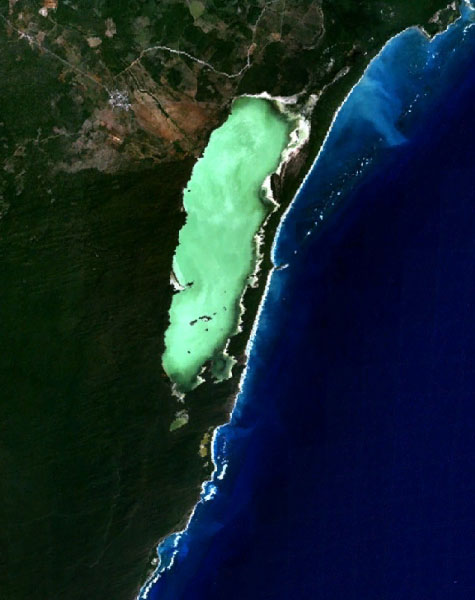
Why is the water at Laguna Redonda green?
That’s a good question, isn’t it? If you took a closer look to the videos and photos above, you’ll see a green shimmer at the water surface.
Green water at Laguna Redonda in the Dominican Republic
The reason for the green water are the mangroves and the rotten leaves from the surrounding trees. In combination with the very salty water, this rare effect of green water is produced. It corrodes at the bottom of the water surface. There are no rocks or stones that could wash the water and make it a little more clear.
That’s why the water at Laguna Redonda shimmers in a light green hue.
I have seen a lot of green water places like stagnant ponds, natural pools or puddles. Mostly, because they are not moving waters. But this was the first time, that I saw a moving water with this green hue.
The water at Laguna Redonda is surprisingly green.
I decided to not swim there, rather enjoy a few silent minutes at the shore and observed the little fisher boat before I continued the trip to Montaña Redonda.
Laguna Redonda is one of these many hidden destinations in the Dominican Republic that are barely known and communicated. Few information are available of it and you have to search for places like that. But once you discovered one of these places, you can be sure to be the only person there.
Bist Du auf der Suche nach Inspiration für das nächste große Urlaubsabenteuer? Hältst Du Ausschau nach einem paradiesischen Urlaubsziel in den Tropen? Hast Du jemals vom schönsten und abwechslungsreichsten Zielort in der Karibik geträumt?
Wenn Du mindestens eine Frage mit “Ja” beantworten konntest, bist Du als Solo-Traveler in der Dominikanischen Republik mehr als geeignet. Wie Du Dir vorstellen kannst, würde ich diesen Artikel nicht schreiben, falls ich keine Beweise liefern könnte, dass das größte Land in der Karibik gleichzeitig eine Vielzahl an tollen Gelegenheiten und Geheimtipps für Individualreisende bietet.
Die Dominikanische Republik ist die meist besuchte Destination in der Karibik. Dennoch hat sie viel mehr zu bieten als…
Große Ferienresorts
All-Inklusiv-Urlaube in Punta Cana
Endlosen Strände mit Kokosnusspalmen
So stellen sich wahrscheinlich die allermeisten Menschen die größte Insel in der Karibik vor.
Die Dominikanische Republik ist ein Paradies für Individualtouristen
Was die Mehrheit jedoch nicht erwarten würde, ist die Vielseitigkeit der Dominikanischen Republik. Und dass sie den Ansprüchen aller ambitionierten Reisenden gerecht werden kann.
Nun gut, sagen wir fast jedem Reisetypen: Wintersport ist vielleicht das einzige Interessengebiet, das die Dominikanische Republik nicht bedienen kann. Aufgrund der warmen und sonnigen Wetterbedingungen sind Snowboard und Skilaufen schlicht unmöglich. Aber eben jenes milde und angenehme Klima wird auf der Insel auch gerne als ‚ewiger Sommer’ beschrieben.
Aber es ist womöglich gerade dieser endlose Sommer, den Du von der Dominikanischen Republik erwartet hättest. Wollen wir uns daher auf all jene spannenden und einzigartigen Charakteristika der Dominikanischen Republik konzentrieren, die Dich gleichzeitig inspirieren und bei der zukünftigen Urlaubsplanung helfen können.
Wusstest Du, dass die Dominikanische Republik…
während Kolombus erster Expedition in 1492 entdeckt wurde?
auch die älteste Stadt auf dem amerikanischen Kontinent beheimatet?
einen Berg hat, der mit 3.098 m höher als die Zugspitze (2.962 m) ist?
Das waren nur einige wenige interessante Fakten um Dein Interesse zu wecken. Und doch hat die Dominikanische Republik noch viel mehr zu bieten.
Lies in diesem Artikel über 10 Merkmale der Dominikanischen Republik, die Dich überraschen werden und Dein Reisefieber anregen werden.
Advertisements
1 – Christopher Kolumbus landete in 1492 auf der Insel
Während einer ersten Erkundungsfahrt entdeckte Kolumbus Amerika, das gehört zum Grundwissen dazu und kennen wir alle bereits aus dem Geschichtsunterricht. Aber wusstest Du auch, dass seine allererste Entdeckung die Insel Hispaniola im Jahre 1492 war?
Im Jahre 1493 wurde an der nordöstlichen Küste der Insel während Kolumbus’ zweitem Aufenthalt die Kolonie ‚La Isabela’ gegründet. Auch wenn die Dominikanische Republik als souveräner Staat viel später erst gegründet wurde, landete Kolumbus auf heutigem dominikanischem Territorium.
Hier landete Christopher Kolumbus vor mehr als 500 Jahren
Obwohl diese Kolonie bereits im Jahre 1500 wegen eines Tornado und dem Goldfund im Binnenland wieder aufgegeben wurde, sind die Fußabdrücke und Hinterlassenschaften von Kolumbus noch immer präsent. Selbst 525 Jahre später können die Sehenswürdigkeiten und Relikte der ersten europäischen Kolonie besichtigt werden.
Auf dem ersten Blick mögen die Ruinen ein wenig unscheinbar und enttäuschend für den Besucher wirken. Vor 1986 hat sich niemand für diesen Ort ernsthaft interessiert. Leider wurden viele alte Gebäude im Jahre 1952 auf Befehl des damaligen Diktators Trujillo mit Bulldozern platt gemacht. Nur die Grundmauern und das rekonstruierte Haus von Christopher Kolumbus sind heutzutage noch in der Ausgrabungsstätte sichtbar.
Auf dem zweiten Blick kannst Du mit etwas mehr Geduld und einem informativen Reiseleiter viele interessante und geschichtsträchtige Informationen lernen. Die Ausgrabungen von La Isabela und die gefundenen Originalwerkzeuge von damals sind schlicht beeindruckend. Die erste europäische Kolonie war auch einem sehr weit entwickelten technischen Stand.
La Isabela eignet sich für einen perfekten Tagestrip für all jene, die Kolumbus’ Schritten folgen möchten, um die ältesten Gebäude der ersten europäischen Siedler auf dem amerikanischen Kontinent zu sehen.
Columbus’ house in La Isabela
Columus’ Landing in La Isabela
Monument and flag of the Dominican Republic in La Isabela
Cemetery in La Isabela (Dominican Republic)
⏳ Wieviel Zeit sollte ich hier verbringen? Nicht mehr als 2 – 3 Stunden
📅 Empfohlener Reisezeitraum: Kann das ganze Jahr besucht werden (Lieber in den Morgenstunden bevor es heiß wird – Es gibt kaum Schatten)
💰 Kosten: Erschwinglich (Eintritt pro Person 200 Pesos <-> 3 – 3,50 Euro. Spanisch sprechender Reiseleiter nicht mehr als 500 Pesos <-> 7 – 9 Euro)
✅ Empfohlen für: Geschichtsliebhaber, Archäologen
Advertisements
2 – Santo Domingo ist die erste Stadt Amerikas
Die Kolonie von Santo Domingo wurde die erste kontinuierliche europäische Siedlung auf dem amerikanischen Kontinent. Aus diesem Grund ist Santo Domingo die ‚älteste Stadt der neuen Welt’. Und gleichzeitig die erste Hauptstadt auf dem amerikanischen Kontinent, der Ort der ältesten Kathedrale, des ersten Krankenhauses und der ersten Universität außerhalb Europas. Während eines Besuches in der dominikanischen Hauptstadt kannst Du wahrlich geschichtsträchtige Luft ein- und ausatmen.
Viele dieser Bauwerke können im pittoresken Kern der Altstadt von Santo Domingo besucht und besichtigt werden. Die Stadt zieht jährlich tausende Besucher aus dem Ausland durch ihre bunten Festivals und Veranstaltungen an. Check den Festivalkalender, bevor Du kommen möchtest – Vielleicht hast Du Glück und besuchst während der Karnevalszeit oder des Merengue-Festivals die Stadt.
Mach Dir wegen der Sicherheitslage nicht zu viele Gedanken. Diese Gegend gilt als eine der am besten bewachten Stadtteile in Santo Domingo. Ebenfalls ist dieser Teil der Stadt einer der saubersten – Auch, wenn das auf den ersten Blick als Besucher eines Landes aus der westlichen Kultur nicht so erscheinen mag. Jedoch ist die koloniale Altstadt vergleichen zu anderen Stadtteilen in einem guten und sauberen Zustand.
Um Deine Erlebnisse und Erfahrungen in der ältesten Stadt auf dem amerikanischen Kontinent abzurunden, möchte ich Dir zwei ganz besondere Orte empfehlen. Du kannst Sie unkompliziert und schnell erreichen, benötigst aber ein Fahrzeug. In ca. 20 – 25 Minuten kannst Du die folgenden beiden Orte besichtigen, die Du nicht verpassen solltest..
Leuchtturm von Kolumbus (‘Faro El Colon’) – Eine monumental gebaute Krypta, in der die sterblichen Überreste von Christoph Kolumbus liegen
Nationalpark ‘Die drei Augen’ (‘Parque Los Tres Ojos’) – Eine offene Kalksteinhöhle mit drei Lagunen. Lies Dir auch unbedingt diesen Artikel durch.
Die Krypta von Kolumbus
Lagune in einer Kalksteinhöhle
Santo Domingo eignet sich perfekt für den Beginn einer Urlaubsreise in die Dominikanische Republik, aber genauso für geschichtsinteressierte Besucher von urbanen Attraktionen.
⏳ Wie viel Zeit sollte ich hier verbringen? Nicht mehr als 2 Nächte
📅 Empfohlener Reisezeitraum: Kann das ganze Jahr besucht werden
💰 Kosten: Erschwinglich.
Die koloniale Altstadt zu erkunden ist natürlich kostenlos. Lässt sich natürlich besser mit einem informativen Reiseleiter erkunden. Sollte zwischen 25 – 30 Euro zu finden sein.
Der Eintritt für den Leuchtturm von Kolumbus kostet 200 Pesos <-> 3 – 3,50 EUR.
Der Zutritt in die Kalksteinhöhle kostet 250 Pesos <-> 4,50 – 5 EUR
Im Gegensatz zu sandigen und ebenen Stränden des Landes befindet sich in der Dominikanischen Republik auch die höchste Erhebung aller karibischen Inseln. Von exakt 3.097 Metern (Höher als die Zugspitze!) grüßt der ‘Pico Duarte’. Dieser erhielt seinen Namen in Anerkennung an Juan Pablo Duarte, einem der Gründungsväter der Dominikanischen Republik.
Die gebirgige Region bietet herausfordernde Aufstiege für Bergsteiger und Kletterer aller Art. Die Bergspitze des Pico Duarte begrüßt jährlich ca. 3.000 Kletterer, die eine nahezu unberührte und natürliche Umgebung genießen möchten. Das sind umgerechnet lediglich 10 Kletterer pro Tag und damit ist der Pico Duarte noch immer so etwas wie ein Geheimtipp. Und wer kann immerhin von sich behaupten, schon einmal den höchsten Berg eines gesamten geographischen Gebietes bestiegen zu haben?
Es gibt viele verschiedene Routen mit unterschiedlichen Schwierigkeitsgraden, beginnend in Jarabacoa. Abhängig von Deinem körperlichen Zustand wirst Du wissen, welche der vielen Routen die für Dich geeignete sein wird. Nur erfahrene Bergsteiger sollten einen Aufstieg ohne lokalen Reiseleiter planen. Allen anderen Menschen empfehle ich den Aufstieg mit Lastentier und erfahrenem Reiseführer mit guten Ortskenntnissen.
Eine weitere Empfehlung für die beste und individuellste Erfahrung ist der richtige Zeitraum zum Aufstieg. Wie Du zuvor lesen konntest, versuchen sich jährlich um die 3.000 Bergsteiger am Pico Duarte. Aber ungefähr die Hälfte dieser Personen planen ihre Reise im Januar und in der Osterwoche. Versuche unbedingt, diese Stoßzeiten zu vermeiden und lieber in der Nebensaison den Berg hochzukraxeln.
Pico Duarte ist die geeignete Herausforderung für Bergsteiger, Abenteuer, Naturburschen und jene Reisende, die die persönliche Herausforderung suchen.
⏳ Wie viel Zeit sollte ich hier verbringen? Rechne mit 4 Tagen für die Standardroute in Jarabacoa.
📅 Empfohlener Reisezeitraum: NICHT während Januar und in der Osterwoche. Lieber in der Nebensaison.
💰Kosten: Moderat. Es gibt privat geführte Touren, deren Kosten stark von der Teilnehmeranzahl und Route abhängen.
Ganz im Gegenteil zum eben beschriebenen höchsten Berg der Karibik befindet sich ebenfalls das exakte geografische Gegenteil.
In der südwestlichen Region der Dominikanischen Republik kann der größte See des Landes und der gesamten Karibik erkundet werden. Der ‚Lago Enriquillo’ bedeckt circa 233 Quadratkilometer und der tiefste Punkt befindet sich auf ungefähr 43m unter dem Meeresspiegel.
Obschon der See aufgrund seiner saisonalen bedingten hypersalinen Eigenschaft recht unwirtliche Lebensbedingungen bietet, haben sich viele Tiere unterschiedlichster Art angepasst und ihr Habitat dort finden können. So finden sich im und am Lago Enriquillo die höchste Anzahl an amerikanischen Krokodilen (Crocodylus acutus) in der Karibik. Mach Dich also auf ein paar wilde Kreaturen gefasst!
Der ‘Lago Enriquillo’ im Südwesten der Dominikanischen Republik
Sehr ungewöhnlich ist ebenfalls, dass sich der Trend zur Ausbreitung des Sees durch Überflutung seit einigen Jahrzehnten konstant hält. Seit 2004 ist der See um beinahe 130% Fläche gewachsen. Dies ist einerseits durch gestiegenen Regenfall bedingt und andererseits dank reduzierten Verdunstungseffekten aufgrund von milderen Temperaturen. Zusätzlich hilft dies wiederum den vielen bedrohten Tierarten bei der Aufrechterhaltung der eigenen Art in ihrem Lebensraum.
Falls Du noch niemals pinke Flamingos in ihrem natuürlichen Lebensraum sehen konntest, hast Du nun die Gelegenheit dazu. Du bist ein Experte in puncto Vogelbeobachtung und suchst neue Herausforderungen? Dann darfst Du Dich schon mal auf Punkt Nummer 8 in dieser Aufzählung freuen!
Wenn Dich Vögel gar nicht interessieren, kannst Du auch endemische Leguanarten am See entdecken. Der Nashornleguan (Cyclura cornuta) hat dort sein Habitat und heißt Dich mit seiner anmutigen und majestätischen Erscheinung willkommen.
Absoluter Geheimtipp: Bring frische Früchte zur Fütterung mit. Die Viecher stehen absolut auf Kirschen.
Lake Enriquillo eignet sich besonders zur Beobachtung der Tierwelt und der natürlichen Ressourcen eines einzigartigen Sees.
⏳ Wie viel Zeit sollte ich hier verbringen? 1 Tag
📅 Empfohlener Reisezeitraum: Kann das ganze Jahr besucht werden
💰Kosten: Gering. Eine Bootstour wird ca. 35 – 40 Euro kosten.
Nun zu einer besonders magisch wirkenden Eigenschaft, die in den letzten Jahren den einen oder anderen viralen Trend ausgelöst hat. In der Nähe von Barahona im südwestlichen Teil der Dominikanischen Republik gibt es ein kleines Dorf namens Polo. Hier haben Sie eine der weltweit wenigen Gelegenheiten, der Schwerkraft auf natürliche Art und Weise am sogenannten magnetischen Pol (‚El Polo Magnético’) zu trotzen.
Wenn Sie ihr Auto im Leerlauf bergab der Straße abstellen, rollt ihr Wagen bergauf! Das glauben Sie nicht? Dann finden Sie es selbst auf dem Hügel der Schwerkraft heraus. Ihr Auto wird aufgrund einer optischen Illusion der Straßenverhältnisse und der umliegenden Landschaft den Berg ‚hinaufrollen’. Dennoch eine interessante und einzigartige Erfahrung in der Dominikanischen Republik und der Karibik.
Und das allerbeste an dieser Anekdote: Es gibt keinen Eintritt und Du kannst daher dieses Erlebnis kostenlos erleben! Ein paar Beweisvideos aufzuzeichnen kann sicherlich nicht schaden. Den magnetischen Punkt von Polo in Deine Rundreise durch die Dominikanische Republik einzuplanen ist sicherlich keine schlechte Idee.
Darüber hinaus gibt es nicht allzu viel zu sehen und erleben in Polo. Diesen Haltestopp auf der Rundreise durch den unbekannten Südwesten sollte nicht auf dem Reiseplan fehlen.
Der magnetische Pol in Polo ist ein außergewöhnliches Reiseziel für Reisen mit einem Mietwagen durch den Südwesten der Dominikanischen Republik.
⏳ Wie viel Zeit sollte ich hier verbringen? 30 Minuten
📅 Empfohlener Reisezeitraum: Kann das ganze Jahr besucht werden
💰Kosten: Gratis
✅Empfohlen für: Nerds, You-Tuber
Advertisements
6 – In der Dominikanischen Republik sind 9 der 50 weltweit besten Golfplätze
Wussten Sie, dass selbst US-Amerikanische Präsidenten auf die Insel kommen, nur um Golf in der Dominikanischen Republik zu spielen? Mit mehr als 30 wunderschönen Golfplätzen – angelegt von weltbekannten Designern wie Jack Nicklaus, Robert Trent, Bobby Jones, Nick Faldo und Peter Dye – zählt die Dominikanische Republik zu einer der besten Destinationen für Golfspieler in Lateinamerika und weltweit.
Der sogenannte ‚Teeth of the Dog’ ist der prestigeträchtigste Golfplatz der Dominikanischen Republik. Jeder ambitionierter Golfspieler wird für einen unvergesslichen Golfurlaub willkommen geheißen. Neun der dominikanischen Golfplätze sind 2010 in die Liste der „Top 50 Golfplätze weltweit“ des Sportmagazins Golfweek aufgenommen worden. Die früheren US-Präsidenten Bill Clinton und George H. W. Bush kamen wie auch viele andere weltweite Profis und Champions in die Dominikanische Republik, um auf den dutzenden Designer-Golfplätzen ihr Können zu beweisen.
Um den Status der Dominikanischen Republik in der Golfwelt noch einmal betonen und hervorheben zu können: Mitglieder der Global Golf Tourism Organization, IAGTO haben die Dominikanische Republik als “Golf Destination of the Year 2019 for Latin America and the Caribbean” gekürt.
Diese internationalen Preise und Auszeichnungen haben der Dominikanischen Republik geholfen, den Status als Golfparadies zu etablieren. Vielleicht planst Du Deinen nächsten Golfurlaub ja auch in der Karibik?
Der Hundezahn eignet sich für alle, die ihr 9er-Eisen selbst mitbringen möchten und einen luxuriösen Urlaub im naheliegenden ‘Casa de Campo’ verbringen möchten.
⏳ Wie viel Zeit sollte ich hier verbringen? Hängt von Deinem Budget ab
📅 Empfohlener Reisezeitraum: Kann das ganze Jahr besucht werden
💰Kosten: Hängen ebenfalls von Deinem Budget ab. Wird aber nicht ganz so günstig werden 🙂
✅Empfohlen für: Golfer
Advertisements
7 – Merengue hat seinen Ursprung in der Dominikanischen Republik
Obwohl Zucker, Kaffee und Tabak zu den wichtigsten wirtschaftlichen Exportprodukten gehören, hat die landestypische Musik namens Merengue das Land durch dieses kulturelle Gut ein wenig bekannter gemacht.
Schnelle rhythmische Musik von handgefertigten Instrumenten in Kombination mit eng umschlungenen und anmutigen Tanzschritten – Nirgendwo sonst kann der dominikanische Lebensstil besser beobachtet werden als während Abenden mit dominikanischer Merengue-Musik. Das Tolle an Merengue ist, dass man diesen Tanz nahezu überall auf der ganzen Insel finden kann. Merengue ist mehr als laute Musik und schneller Tanz, es ist ein Ausdruck dominikanischer Lebensfreude!
Im Juli und August gibt es mehrere Merengue-Festivals in Santo Domingo zu besuchen und zu bestaunen. Üblicherweise finden diese am kilometerlangen Strandboulevard statt und Sie können bis spät in die Nacht den typischen dominikanischen Klängen zuhören.
Ein besonderer Geheimtipp ist der Besuch des Restaurants ‘El Conuco’. Eines der besseren Restaurants mit traditioneller Dekoration, Kellnern in folkloristischer Kleidung und mit landestypischer Küche. Ich selber habe zuvor noch niemanden so schnell aber kontrolliert tanzen sehen dürfen, wie die beiden Personen im obigen Video auf einer Flasche Rum. Richtig gelesen: AUF einer Flasche, nicht mit einer Flasche!
Erst vor Kurzem hat die UNESCO die traditionelle dominikanische Musik und Tanz rund um das Merengue als immaterielles Kulturerbe gewürdigt. Eine mehr als respektable Auszeichnung für die kulturelle Identität der Dominikaner.
Der Musikstil Merengue und das gleichnamige Festival ist ideal für alle kulturellen Entdecker, aktiven Tänzer und neugiere Besucher, die gerne mal das Tanzbein schwingen.
⏳ Wie viel Zeit sollte ich hier verbringen? 1 Tag
📅 Empfohlener Reisezeitraum: Das Festival findet normalerweise Ende Juli / Anfang August statt
8 – Die meisten Vogelarten der Karibik haben ihr Habitat in der Dominikanischen Republik
Du erinnerst Dich an den kurzen Hinweis aus Kapitel 4? Nun ist der Moment gekommen, auf den die Vogelbeobachter gewartet haben!
Vogelbeobachter und Ornithologen haben seit einiger Zeit das Interesse der Reiseziele auf sich gezogen. Aus dieser Perspektive ist die Dominikanische Republik ein reines Paradies für Vogelbeobachter und Ornithologen.
Insbesondere der Nationalpark ‚Los Haitises’, die Wüste ‘Bahoruco’ und der Gebirgszug ‚Septentrional’ bieten fantastische Gelegenheiten zur Beobachtung der geflügelten Fauna aus der Dominikanischen Republik. Zwischen tropischen Bäumen und vielen weiteren Tierarten können viele zum Teil auch vom Aussterben bedrohte Vogelarten beobachtet werden.
Vogelbeobachtung in der Dominikanischen Republik
Flamingos bei ‘Laguna Oviedo’ in Barahona
Die Diversität der Vogelarten aus der Dominikanischen Republik begründet sich teilweise auch wegen der komplexen geologischen Geschichte der Insel Hispaniola. Die Insel gehört auch geographisch zu den Vielseitigsten der ganzen Karibik dank unterschiedlicher mikroklimatischen Zonen. Insgesamt finden 320 verschiedene Vogelarten ihr Habitat in der Dominikanischen Republik. Davon sind 32 endemischer Art und diese Exklusivität zieht ein besonderes Interesse eines Vogelbeobachters nach sich.
Diese dominikanischen Reiseziele sind optimal für Vogelbeobachter und Ornithologen, die ihre Ferngläser selber mitbringen möchten und in der Dominikanischen Republik bis zu 320 Vogelarten beobachten möchten.
⏳ Wie viel Zeit sollte ich hier verbringen? Wer sich rein zur Vogelbeobachtung in die Karibik aufschwingt, sollte mindestens 14 Tage und viel Geduld einplanen.
📅 Empfohlener Reisezeitraum: Kann das ganze Jahr besucht werden
💰Kosten: Teuer
✅ Empfohlen für: Naturliebhaber, Vogelbeobachter
Advertisements
9 – Den höchsten Wasserfall der Karibik kennen selbst 99% der Bevölkerung und Trip Advisor nicht
Wann immer es um wirklich geheime Geheimtipps für Reisende in die Dominikanische Republik geht, darf die folgende Anekdote nicht fehlen. Völlig unbeachtet von allen Reiseführern und Ausflugsplanern des Landes kann der höchste Wasserfall der Karibik gefunden werden. Aus insgesamt 118m fällt das Wasser hinab.
Es geht um den ‚Salto de La Jalda’. Gleichzeitig ist dieser Wasserfall ein Reiseziel, das selbst die meisten Einheimischen nicht kennen. Es ist (Stand Januar 2020) nicht einmal bei Trip Advisor gelistet worden. Eine Tour zu diesem Wasserfall wird 4,5 Stunden Fußmarsch oder 2,5 Stunden mit dem Pferd benötigen. Vergessen Sie nicht, ihre Schwimmbekleidung mitzunehmen bevor Sie losziehen, kühles Wasser wird Sie erfrischen, wenn Sie angekommen sind.
Da es sich um einen lupenreinen Geheimtipp handelt, solltest Du nicht zu lange mit einem Besuch zögern. Wenn Reiseveranstalter diesen geheimen Wasserfall ebenfalls für sich entdecken und für ihre Zwecke nutzen, bleibt es kein Geheimtipp mehr.
Übrigens: Der höchste Wasserfall der Karibik ist – mal abgesehen vom langen Wanderweg – lediglich 2 Stunden von Punta Cana und den All-Inklusiv-Resorts entfernt. Somit eignet er sich für eine abenteuerliche Tagestour.
Der streng geheime Wasserfall ‚Salto de La Jalda’ ist das perfekte Ausflugsziel für Entdecker, Naturliebhaber und abenteuerliche Pioniere, die die allerersten sein möchten.
⏳Wie viel Zeit sollte ich hier verbringen? 1 Tag
📅 Empfohlener Reisezeitraum: Kann das ganze Jahr besucht werden
💰 Kosten: Moderate
✅ Empfohlen für: Naturliebhaber, Wanderer
Advertisements
10 – Buckelwale werden in der Dominikanischen Republik geboren
Insbesondere Naturliebhaber, die sich an den vielen Tieren der Dominikanischen Republik erfreuen möchten, werden auf ihre Kosten kommen. Jedes Jahr gegen Januar kommen ungefähr 2.000 – 3.000 der riesengroßen Buckelwale in der Bucht der Halbinsel Samaná an.
Sie ziehen jahreszeitbedingt aus dem kühlen nördlichen Atlantik in die milden dominikanischen Gewässer, um ihre Kälber zu gebären und großzuziehen. Die neugeborenen Buckelwale haben keine ausreichenden Fettreserven um die kalten Winter in den nördlichen Gewässern zu überleben. Aus diesem Grund kommen sie in die Gewässer der Dominikanischen Republik und bleiben bis Ende März um sich auf die Rückkehr in die grönländischen Gewässer und deren Nahrungsgründe und Fischgebiete vorzubereiten
Walbeobachtung in der Dominikanischen Republik
Im weitesten Sinne sind also die gigantischen Buckelwale gebürtige Dominikaner, die im Ausland leben, um zum jährlichen Sommerbesuch in ihre Heimatländer (oder besser: Heimatgewässer) zurückzukehren.
Die Halbinsel Samaná ist hervorragend für Walbeobachter und Tierliebhaber geeignet und all jene, die in ihrem Leben schon mal Wale in freier Wildbahn sehen wollten.
⏳ Wie viel Zeit sollte ich hier verbringen?1 full day
📅 Empfohlener Reisezeitraum: From January till mid of March
💰 Kosten: Gering. Ein Reiseführer (ca. 35 EUR) ist ein absolutes MUSS.
✅ Empfohlen für: Naturliebhaber. Wanderer.
Advertisements
Haben Dir diese 10 spannenden und einzigartigen Fakten über die Dominikanische Republik gefallen? Fühlst Du Dich nun ausreichend inspiriert, um dort Ihren nächsten Traumurlaub zu verbringen?
Wie bereits zuvor beschrieben, kann die Dominikanische Republik viele interessante Facetten demonstrieren, die jeder Individualreisende zu schätzen weiß. Sofern Du weitere Ratschläge für Deinen persönlichen karibischen Traumurlaub in der Dominikanischen Republik benötigst, schau Dir auch die anderen Artikel auf meinem Blog an. Du wirst einige Reiseziele und Empfehlungen erhalten, die teilweise nirgendwo sonst im Internet zu finden sind.
Falls Dir der Artikel gefallen hat, hinterlasse ein Kommentar und folge mir auf den sozialen Medien. Verpass niemals einen neuen Artikel und trag Dich in den Newsletter ein!
Are you looking for some real inspiration for your next big travel adventure? A tropical paradise in a coconut shell? Never considered traveling to the most beautiful and diverse destination of the Caribbean? Maybe the Dominican Republic? I would love to inspire with 10 insider facts of the Dominican Republic for individual travelers.
If you answer at least one of these questions with a “Yes”, you are eligible to become an individual traveler in the Dominican Republic. As you can imagine, I wouldn’t write this article, if I couldn’t present some reasons to emphasize, that the biggest country in the Caribbean has at the same time plenty of opportunities and hidden gems to visit as an individual tourist.
During Canyoning – An offroad excursion at “Cola de Pato”
The Dominican Republic is the most visited destination in the Caribbean. Yet it has much more to offer than the usual and expectable things. Naming a few…
Big holiday resorts
All-Inclusive-vacations in Punta Cana
Palms along endless beaches
These are standardized imaginations. Probably these are the imaginations most people expect when it comes to this country.
The Dominican Republic is a paradise for individual tourism
What most people don’t know is the versatility of the Dominican Republic. And that it can satisfy the needs of every ambitious traveler type.
Well, let’s say almost every travel type. Winter sports might be a little difficult to realize because of warm and sunny conditions for all year round. For this reason, the climate of the Dominican Republic is also known as an “endless summer.”
But an endless summer in the Caribbean is probably what you already expected. Rather let us focus on some thrilling and unique features of the Dominican Republic which inspire you to travel instantly.
Did you know, that the Dominican Republic…
was discovered during Columbus first expedition?
is also home of the oldest (capital) city of the entire American continent?
has the highest mountain (10,164 feet – 3.098 m) of the Caribbean?
These are only a few of the triggering facts to create curiosity. Yet, the Dominican Republic has much more to offer.
Read in this article 10 characteristics about the Dominican Republic that might surprise you to create wanderlust and see it with your own eyes.
Advertisements
1
Columbus landed here in 1492
Christopher Columbus landed during his first voyage first on the Bahamas and later on Hispaniola Island on December 5, 1492. In 1493, the colony of La Isabela was built on the northeast coast on Columbus’ second trip. Even though the Republic itself was founded as a sovereign state much later, Columbus landed on today’s Dominican territory.
Columbus’ Landing in the Dominican Republic
La Isabela was depopulated by 1500 due to a hurricane. Furthermore, the discovery of gold one year earlier in 1499 in the interior of the country made people flee to follow the gold rush. But the footsteps of Christopher Columbus are still present. And even 525 years later, the site of La Isabela can be visited. There are still some relics of the very first European settlement in the Americas.
On the first glance the ruins of Isabella might appear a little disappointing to the visitor. Before 1986, almost no one was taking care of that place. Unfortunately, a lot of construction material was cleared up by bulldozers in 1952 because of presidential order of the dictator Trujillo. Only the foundation grounds and the reconstructed House of Christopher Columbus are nowadays visible at the excavations of La Isabela.
At second appearance, you can find with a little bit more patience and an informative tour guide a lot of interesting information about the place. Very impressive are the excavations of La Isabela and the items the people from back then were using. They can be seen in the museum. Even recollections from the old Taino people could be found during the excavations. This first European colony was on a very developed state-of-the-art back then, Spanish style.
La Isabela is perfect for a half day trip. And for everyone who would like to follow Columbus’ path seeing the oldest buildings of the first European settlers. Travelers who love to see historical facts with their own eyes will love the colony of La Isabela.
Columbus’ house in La Isabela
Columus’ Landing in La Isabela
Monument and flag of the Dominican Republic in La Isabela
Cemetery in La Isabela (Dominican Republic)
⏳ How much time should I spend here? Not more than 2 – 3 hours
📅 Recommended visit: All year season (Better in the morning hours before it starts to get hot – There is no shade)
💰 Costs: Affordable
Admission per person 200 Pesos <-> 3.50 – 4 USD.
Spanish speaking local tour guide not more than 500 Pesos <-> 8 – 9 USD)
✅ Suitable for: History lovers, archaeologists
Advertisements
2
Santo Domingo is the first capital city on the American continent
The colony of Santo Domingo became the first permanent European settlement in the Americas. Consecutive upon that, Santo Domingo is the oldest city in the new world. Also at the same time, it is the first capital city, the first place of a Catholic cathedral out of Europe, and has the first university and hospital in Latin America. You can breathe in centuries-old history in the Dominican Republic.
Die koloniale Altstadt von Santo Domingo
Iglesia de Nuestra Señora del Carmen
Santo Domingo is the oldest city on the American continent.
Some of the original buildings have been restored and can be visited in the charming Colonial City of Santo Domingo. For this reason, a visit to the Dominican Republic should always include a few days Santo Domingo and the Colonial Zone with its picturesque and dainty flair which is worth to discover. Additionally, it attracts yearly thousands of visitors for its festivals. Check out the festival schedule – Maybe you can join the local Carnival, Barbarella and Merengue festivals.
Don’t worry too much about not being safe in the Colonial Zone. This neighborhood is one of the most protected areas in Santo Domingo. Next to that, this part of the city is one of the cleanest – Although it might not seem as it is from the perspective of a visitor from a first world country. But compared to many other neighborhoods, the Colonial Zone is in a quite good and clean condition.
To round up your experience in the oldest city of the American continent, I would like to recommend you to visit two more places which are easy to reach from the Colonial Zone. You’ll need a vehicle though, but would be able to get to the destinations in less than 20 minutes driving time.
Columbus Lighthouse (‘Faro El Colon’) – A mausoleum monument, that contains the remains of Christoph Columbus.
The three Eyes (‘Parque Los Tres Ojos’) – An open-air limestone cave with three lagoons. Check also this dedicated article.
Columbus’ Lighthouse
Parque Los Tres Ojos
Santo Domingo is perfect to start your vacation as an individual traveler in the Dominican Republic. Urban lifestyle and city travelers will love the metropolitan part of the country.
⏳ How much time should I spend here? Not more than 2 nights
📅 Recommended visit: All year season
💰Costs: Affordable
Discovering the Colonial Zone is of course free. But with a local tour guide much more informative and worth it. Should be available between 25 – 35 USD.
Admission for Columbus’ Lighthouse is 200 Pesos <-> 3.50 – 4 USD
Entrance for “The three eyes” is 250 Pesos <-> 4.50 – 5 USD
✅ Suitable for: Urban travelers, history lovers
Advertisements
3
The highest peak of the Caribbean
Contrary to sandy and pristine beaches, the Dominican Republic has the highest mountain of all Caribbean islands. ‘Pico Duarte’ is 10,164 feet (3.098 m) high and was named in appreciation of Juan Pablo Duarte, one of the Dominican Republics’ founding fathers.
The mountainous area offers challenging ascents for hikers. Its peak welcomes yearly approximately 3,000 climbers who like to experience its incredible beauty. That’s less than 10 people every day! As a result of this a real insider tip for everyone who likes to discover nature and be all alone on top of a mountain. And who can claim to have made it to the highest point of a geographic area? If you consider visiting the Dominican Republic, you hopefully have now an additional motivation to hike to Pico Duarte and be on top of the Caribbean!
There are several routes with varying difficulty levels from Jarabacoa that lead to Pico Duarte. Depending on your physical condition, you know which routes and which difficult level are best for you. Only experienced ascensionists should consider to do it alone without a tour guide. It’s recommended to climb up the mountain accompanied by pack animals and tour guides with a good knowledge of the area.
Another little recommendation to maximize your individual experience would be to visit it off the high season. You know now, that approximately 3,000 travelers approach Pico Duarte yearly. But almost the half does it only in January and during the Easter holidays! Try to avoid these peak times and reach the peak of the mountain for the rest of the year.
Pico Duarte is the ideal assignment for mountaineers, adventurers and everyone who seeks for an individual challenge.
⏳ How much time should I spend here? You should expect 4 days for the standard route. Starting ideally from Jarabacoa in the mountains.
📅 Recommended visit: NOT during January and Easter. Evade the peak times and go in low season
Conversely to everything that was written before about the highest peak of the Caribbean, the Dominican Republic possesses the exact geographic opposite.
Located in the southwestern region of the country, Lake Enriquillo is the largest lake and the lowest elevation in the whole Caribbean. It covers an area of 145 square miles and the lake level is approximately 140 feet below sea level. Although it can appear seasonable as hypersaline, Enriquillo Lake offers habitat conditions to the largest population of American crocodiles (Crocodylus acutus) in the Caribbean.
Lago Enriquillo in the southwestern part of the Dominican Republic
Very unusual as well as the flooding trend: Since 2004 the lake has grown by almost 130% due to increased rainfall and reduced evaporation caused by milder temperatures. This, on the other hand, helps some endangered species who are living in the lake to keep their habitat protected.
Have you ever seen wild flamingos in their natural habitat? At Lake Enriquillo, you’ll have the chance to! You’re a bird watching expert and need some elaborated challenges? As a hint, you should remain patient and wait for the reason number 8 for individual tourism in the Dominican Republic.
If you’re not interested in birds at all, you can also find an endemic iguana species at Lago Enriquillo. The Rhinoceros Iguana (Cyclura cornuta) has its habitat there and welcomes you with its majestic appearance. Insiders’ tip: Bring some fresh fruits and feed them, they love cherries!
Lake Enriquillo is a very suitable destination for wildlife watching and nature exploration. And everyone who wants to see pink flamingos needs to see Lago Enriquillo.
Now to a very magic characteristic of the Dominican Republic that became over the last years more and more a viral trend. Close to Barahona in the southwestern part of the country, a tiny town called Polo can be found. Here you have one of the few opportunities in the world to trick scientific laws and challenge gravity at the Magnetic Pole (El Polo Magnético).
If you are going to stop your car in neutral gear in the downhill section, your car will roll up! You don’t believe it? Please drive to Polo and check out the gravity hill. Your car rolling up is caused by an optical illusion due to the condition of the road and the landscape itself. Still, a nice and unique experience. Don’t forget to take enough convincing photos or even illusory videos as a memory. Most importantly: No entrance fees are charged and you can discover it for free! For this purpose, it might be a good idea to include the magnetic pole into your road trip.
Apart from that, there is not much to see and do in Polo. But you can use this stop in your road trip as a nice stopover to continue to the unknown southwest of the country.
The Polo Magnético is ideal for everyone who wants a self-drive tour across the Dominican Republic. And for those who want to trick laws of nature.
⏳ How much time should I spend here? 30 minutes
📅 Recommended time: All year season
💰Costs: Free of charge
✅ Suitable for: Nerds, You-Tubers
Advertisements
6
You will be able to play presidential Golf at ‘Teeth of a dog’
Did you know, that even former US-presidents are coming to the island to play golf? Furthermore, the Dominican Republic ranks with more than 30 beautiful golf courses among the best golf destinations in Latin America. Swing and no miss in the Dominican Republic! Most were designed by famous designers like Jack Nicklaus, Robert Trent, Bobby Jones, Nick Faldo and Peter Dye.
The ‘Teeth of the Dog’ course is the most prestigious Golf course in the Dominican Republic. Feel welcome to spend unforgettable golf holidays in the Caribbean. Nine of the Dominican golf courses are mentioned amongst the “Top 50” in the listing of the magazine Golfweek. Many sports champions, enthusiasts and celebrities from around the world came to the Dominican Republic to play Golf. To emphasize some of them: Former U.S. Presidents Bill Clinton and George H.W. Bush came to play at the Dominican designer golf courses.
Teeth of the Dog golf course is for everyone who would like to bring his or her own pair of clubs. And for those who prefer having a luxury holiday in a Caribbean destination.
⏳ How much time should I spend here? Depends on your budget
📅 Recommended visit: All year season
💰Costs: Expensive
✅ Suitable for: Golfers
Advertisements
7
Merengue has its cultural origin in the Dominican Republic
Sugar, coffee, and tobacco are the most important economic export products of the Dominican Republic. But it’s the typical Merengue music and dances who made the country internationally popular and famous in cultural aspects.
Fast-paced rhythmic music from hand-made instruments in combination with close and graceful dancing moves – nowhere else can the Dominican lifestyle be better observed as during the evenings when the Merengue music is played. The good thing is, that you will find it everywhere in the whole country. Merengue is not only the music and not only the dance, it is a cultural Dominican expression!
In July and August there are several Merengue festivals in Santo Domingo that wait to be discovered from you. They take place around the Malecón and the music beats keep pumping all night. A very special insiders’ tip is the visit of the restaurant ‘El Conuco’. It is one of the most typical Dominican restaurants of the city with traditional decoration, staff in folkloric clothing and typical Dominican dishes. I haven’t seen before anyone dancing as wild but controlled as these two people ON a bottle of rum. Yes, ON a bottle, not with a bottle!
‘Festival de Merengue’ is for cultural explorers, active dancers and such who want to move their hips to Caribbean music.
⏳ How much time should I spend here? One day
📅 Recommended visit: Takes place usually late July – early August
💰Costs: Free of charge
✅ Suitable for: Cultural interested people, dancers
Advertisements
8
Most bird species of the Caribbean have their habitat in the Dominican Republic
You remember the little hint I gave the bird watching experts in chapter 4? Now your time has come to discover why!
Bird watchers have been considered lately with a decent interest from travel destinations. Hence, the Dominican Republic is a pure paradise for bird watchers. Especially Los Haitises National Park, Sierra de Bahoruco and Cordillera Septentrional offer stunning opportunities to observe the winging Dominican wildlife. Amongst tropical trees and many other animals, some threatened, endangered and even endemic species can be seen. Under those circumstances, the Dominican Republic is a pure paradise for ornithologists.
Bird watching in the Dominican Republic
Flamingos at Laguna Oviedo
The diversity of bird species in the Dominican Republic is a consequence of Hispaniola’s complex geologic history with various microclimatic zones. In the Caribbean, the island is geographically the most diverse and enables the habitat conditions. As a result, it offers a habitat for 320 birds whereof 32 are endemic bird species.
And the Dominican birds are worth to glass. You should observe them with your own eyes – or your own field glasses. The unknown southwest offers many opportunities for bird watchers and such who want to become it.
📅 Recommended visit: All year season
💰Costs: Expensive
✅ Suitable for: Nature lovers, bird watchers
Advertisements
9
Neither 99% of the local population nor Trip Advisor know the highest waterfall of the Caribbean
Whenever it comes to really secret insider tips, the following Dominican destination shouldn’t be missed in any anecdotes. Totally disregarded by all guide books and excursions in the country, there is one of these secret insider tips. A waterfall with a single-drop of 390 feet (119 m) can be found in the middle of a green area.
We’re talking about the waterfall ‘Salto de La Jalda’. Truly a travel destination, which is unknown to most of the locals and not even listed on Trip Advisor. A trip to this secret waterfall will take you about 4.5 hours by foot or 2.5 hours on horseback. Don’t forget to pack your swimsuit before you go. Chilled water will refresh your mind once you arrive there.
As it can be still considered as an absolute hidden gem, you shouldn’t hesitate too long to go there. See it with your own eyes, before standardized package tour operators will bring thousands of tourists here. Furthermore, this stunning beauty is beside its long hike easy to reach. In detail, it’s just 1.5 hours distance away from Punta Cana and 2 hours from Santo Domingo. For this reason, it would be the ideal destination for an adventurous day trip.
The top-secret waterfall Salto de La Jalda is perfect for explorers, nature lovers and adventurous travel pioneers.
⏳ How much time should I spend here? 1 full day
📅 Recommended visit: All year season
💰 Costs: Moderate
✅ Suitable for: Nature lovers, hikers
Advertisements
10
Giant humpback whales are born in the Dominican Republic
Especially nature lovers who want to enjoy the diversity of animals will get one’s money’s worth in the Dominican Republic. Each year, approximately 2,000 – 3,000 giant humpback whales arrive in the bay of the peninsula Samaná.
They are migrating seasonally from the Northern Atlantic to the milder Dominican waters for calving and breeding. Their newborns don’t have enough fat reserves to be able to survive the cold winter waters in the northern waters, that’s why they come here to the Dominican Republic. In late March, they are returning to North America, Greenland, and Iceland to their feeding sites to prepare for the next season.
Whale watching in the Dominican Republic
In a wider sense, giant humpback whales are native Dominicans who live abroad for the summer and come back home for winter. Of course, they visit their homeland (or better: “homewater”) every year. How cool is that?
The Samaná Peninsula is ideal for whale watchers, animal lovers and everyone who wants to see whales with their own eyes.
⏳ How much time should I spend here? 1 full day
📅 Recommended visit: From January till mid of March
💰 Costs: Moderate
✅ Suitable for: Nature lovers, hikers
Advertisements
Did you like these 10 thrilling and unique features about the Dominican Republic? Do you feel inspired to plan your next dream holidays there?
As described before, the Dominican Republic has many interesting characteristics that every individual traveler would cherish. If you need more recommendations for your Caribbean dream holiday and some more insiders’ tips, be forearmed for other articles on this blog. You’ll read about some destinations that are hard to find and possibly not even communicated elsewhere in the internet.
If you were happy reading this article, I would be very happy if you are happy to subscribe to my blog to never miss an update. Let’s both be happy together!
Did you like this article?
Subscribe to my blog and never miss an update!
I can promise you, that many other articles are currently under construction and just wait for you to be read.
Come back regularly and check out many more interesting stories about the
I can’t say, that I’m a lucky guy, but this day I was very lucky to have had the opportunity to see something very special at ‘El Conuco’ in Santo Domingo. It was November 26, 2019 and I had dinner in a restaurant in the Dominican capital city. Luckily, it was one of the most typical Dominican restaurants of the city with traditional decoration, staff in folkloric clothing and typical Dominican dishes. But the best thing about all this was this specific day itself. Later I found out, that the November 26 is the ‘National Merengue Day’ and that it’s even an ‘Intangible Cultural Heritage of Humanity‘.
To honor this specific day with its traditional music and dances, the employees of the restaurant wore traditional Dominican clothes and showed some Merengue dances. Not the normal dances you’d expect, but on a bottle. Yes, ON a bottle, not with a bottle!
I remember, that I danced myself already very often WITH a bottle, but never ON a bottle. Most of the times, these bottles I danced with contained alcoholic beverages, that let me dance more than usual. But that specific dance the couple demonstrated was something I didn’t expect to see that evening. Almost as good as dancing on a bottle was the finisher of another dance with several pirouettes for the poor lady:
Dominicans call this dance ‘Perico Ripiao’. I haven’t seen before anyone dancing as wild but controlled as these two people. Thank you, dear coincidence, that I was at the time on the right place and could see it with my own eyes!
La cultura dominicana no esta a flor de piel y para muchos extranjeros no es tan fácil experimentarla. Si hablamos en comparación con otros países latinoamericanos, República Dominicana tiene menos de las que esperarías. Aunque la mayoría se perciben como personas estrictamente católicas, esto cambia a la hora de celebrar festividades como el Carnaval. La celebración de la independencia que es el 27 de febrero apenas se reconoce con una festividad. Sera que los Dominicanos prefieren estar en la playa en vez de celebrarlas a lo grande como en otros países?
Tuve la alegría de ver una excepción a esta regla en San Cristóbal. Anualmente el último domingo de noviembre se celebra la ‘Fiesta de Palos’ cerca de la ciudad capital de la República Dominicana. ¡Afortunadamente, pude unirme a esta mezcla de sonidos y me sorprendió como los dominicanos celebraron su cultura un domingo por la tarde en San Cristóbal!
A unas 20 millas de Santo Domingo, se puede encontrar en la mapa a un pueblo llamado “San Cristóbal”. Ni mi novia dominicana ni sus padres con los que viajaba sabían que nos esperaba esta tarde.
Estábamos visitando a algunos familiares de ese pueblo que organizaban en su calle una vez al año la “Fiesta de Palos”. Aunque viven bastante cerca de la capital de la República Dominicana en San Cristóbal, este tipo de festividades no se celebran en los distritos urbanos de Santo Domingo. Lo que significa que ellos también aprendieron algo nuevo sobre su propio país, la cultura Dominicana y sus co-ciudadanos.
Para mí, como Super-Gringo, todo era absolutamente nuevo y sorprendente. Sin tener una buena conexión con la familia de mi novia, nunca hubiera tenido acceso a una comunidad como esa. Por lo tanto, estoy muy agradecido de haber obtenido esta oportunidad para ver de la cultura dominicana, que generalmente está oculta para los extranjeros. Comparablemente con mi experiencia de sentirse como Eminem en Guallupe, Ecuador en diciembre de 2017, nuevamente fui el único extraño blanco y extranjero en una comunidad. Y nuevamente, me recibieron con los brazos muy abiertos y con un espíritu sincero que me complació mucho.
Tomé mi GoPro y hice muchos videos, pero desafortunadamente no muchas fotos. Para explicar un poco mejor estas festividades, podría ser útil leer las siguientes preguntas:
¿Qué es la “Fiesta de Palos”?
La “Fiesta de Palos” es una festividad cultural en la República Dominicana para honrar a los santos católicos o aniversarios de los fallecidos. Suele tener lugar en zonas rurales.
Advertisements
¿Dónde tiene su origen la “Fiesta de Palos”?
La “Fiesta de Palos” tiene sus raíces en el Congo, África Central. Junto con sus instrumentos africanos folklóricos, se caracteriza por sus ritmos rápidos, cantos fuertes y bailes juguetones.
¿Cuáles instrumentos se tocan en “Fiesta de Palos”?
Por lo general, se utilizan tres tambores largos diferentes con una altura de hasta 3 a 4 pies. Los dominicanos llaman a estos tres tambores El Mayor, El Menor y El Alcahuete. Y no, esa palabra no es una traducción incorrecta ni una broma. Realmente llaman a este tambor ‘pimp’.
Junto a la batería larga, los idiófonos acompañan el sonido para completar los ruidos fuertes.
¿Dónde se celebra la “Fiesta de Palos”?
Posiblemente en todas partes en la República Dominicana, pero más en el campo y en barrios con muchos habitantes de ascendencia afroamericana. Fiesta the Palos no es una fiesta urbana y no se puede encontrar en las zonas turísticas de Punta Cana. Necesitas profundizar un poco más antes de encontrar las verdaderas raíces dominicanas con su cultura y música.
¿Con qué frecuencia se celebra la “Fiesta de Palos”?
De manera muy irregular. La “Fiesta de Palos” está asociada con las celebraciones de vírgenes y santos. Cada vez que hay un fuerte vínculo entre una aldea y una figura católica sagrada, se trata de que los aldeanos los honren anualmente con esta festividad. Dependiendo de qué virgen o santo sea apreciado o adorado, las fechas de la fiesta también varían. No existe ninguna regla consistente o periódica para toda la República Dominicana. Todo depende de los favores de los aldeanos a los santos, o viceversa, como quieras.
Este tipo de actividades culturales de pequeño tamaño no se comunican ni publican transregionalmente y siguen siendo conocimiento interno. Es muy difícil encontrarlos, aún más difícil para los extranjeros.
¿Qué es especial de la Fiesta de Palos?
Una de las cosas más sorprendentes fue para mí, que los músicos no recibieron ningún aplauso. Si observas cuidadosamente los videos hasta el final de sus canciones, notará que nadie de la audiencia aplaude a la banda. Fue la primera vez en mi vida que observé a una audiencia que no valora la presentación con aplausos, aunque la apoya con fuerza y bailes. Las pregunté a algunas personas por qué no aplauden la música. Ellos respondieron: “No es parte de esta cultura y nunca hacemos eso cuando alguien toca canciones como esa”.
Otra cosa interesante es que cada uno de estos tambores largos es tan único como su creador. Todos se producen a mano y nunca en fabricación por lotes. Por lo general, estos tambores están hechos de árboles ahuecados y cubiertos con pieles de cabra o vaca para la cabeza. Cada tambor hace un sonido diferente.
Advertisements
Fiesta de Palos es una gran reunión con gente bebiendo, bailando, charlando todo el día. No muy diferente a un Colmado dominicano habitual en la noche. Pero con el deseo de mantener la cultura afroamericana en la República Dominicana. Como puedes imaginar, estas tradiciones rurales con su música y bailes se extinguen, debido a la falta de comunicación y grabaciones digitales. Espero poder contribuir al menos un poco para conservar una pequeña parte de la tradición dominicana con la publicación de este artículo.
Ni siquiera podía decir qué santo católico específico fue honrado ese día. La mesita con las velas en los videos mostraba los devocionales. Pero durante todo el tiempo que estuve allí, no se comunicó a quién honrar ese día. Tampoco entendí realmente de qué estaban cantando, sus palabras eran muy fuertes, rápidas y argot. Pero fue un día muy especial para mí ver la Fiesta de Palos en la República Dominicana y entendí un poquito mas de la cultura Dominicana.
The Dominican culture is hard to find and for foreigners sometimes even harder to detect. In comparison to many other Latin American countries, they spare out some festivities you would expect from a country like the Dominican Republic. Although they perceive themselves as strictly catholic people, they don’t express it with religious festivities during Carnival and with Easter progressions in a collective and colorful way. The national holiday on February 27 is as well barely recognized with organized and widespread festivities or ceremonies. I had the joy to saw a great exception of that rule in San Cristobal. They celebrate annually on the last Sunday in November a ceremony called ‘Fiesta de Palos’ (Translated: Stick party) close to the capital city of the Dominican Republic. Luckily, I could join this racket and was surprised how Dominicans celebrate their culture on a Sunday afternoon in San Cristobal!
Some 20 miles away from Santo Domingo, a village called ‘San Cristobal’ can be found on the map. Neither my Dominican girlfriend nor her parents I was traveling with knew what to expect from this afternoon.
We were visiting some relatives of that village who organize on their street once in a year the ‘Fiesta de Palos’. Although they are living quite close to the capital of the Dominican Republic in San Cristobal, these types of festivities aren’t celebrated in the urban districts of Santo Domingo. Which means, that also they learned and something new about their own country and fellow citizens.
For me as a Super-Gringo, everything was absolutely new and astonishing. Without having a good connection to the family of my girlfriend, I would never have access to a community like them. Thus, I am quite thankful to have obtained this insight to the Dominican culture, which usually is hidden to foreigners. Comparably to my Eminem-experience in Guallupe in Ecuador in December 2017, I was again the only white and foreign stranger in a black community. And again, they welcomed me with very open arms and with a candid spirit that pleased me very much.
I took my GoPro and took a lot of videos, but unfortunately not many photos. To explain these festivities a little bit better, it could help to read the following questions:
What is ‘Fiesta de Palos’?
‘Fiesta de Palos’ is a cultural festivity in the Dominican Republic to honor Catholic saints or anniversaries of the deceased. It usually takes places in rural areas.
Advertisements
Where does ‘Fiesta de Palos’ has its origin?
‘Fiesta de Palos’ has its roots in Congo, Central Africa. Along with its folkloric African instruments, it’s characterized by its up-tempo rhythms, loud chants, and playful dances.
What instruments are played at ‘Fiesta de Palos’?
Usually, three different long drums are used with a height of up to 3 – 4 feet. The Dominicans call these three drums El Mayor, El Menor and El Alcahuete à The oldest, the youngest and the pimp. And no, that translation is neither wrong translated, nor a joke. They really call this drum a pimp.
Next to the long drums, idiophones accompany the sound to complete the loud noises.
Where is ‘Fiesta de Palos’ celebrated?
Possibly everywhere in the Dominican Republic, but more likely on the countryside and in villages with many inhabitants of Afro-American descent. Fiesta the Palos is not an urban festivity and can’t be found in the touristy areas around Punta Cana. You need to dig a little deeper before finding the true Dominican roots with its culture and music.
How often is ‘Fiesta de Palos’ celebrated?
On a very irregularly basis. ‘Fiesta de Palos’ is associated with the celebrations of virgins and saints. Whenever there is a strong bond between a village and a holy catholic figure, it’s about the villagers to honor them on a yearly basis with this festivity. Depending on which virgin or saint is cherished or adored, the festivity dates also varies. There isn’t any consistent or periodical rule for the entire Dominican Republic. All depends on the favors of the villagers to the saints – Or vice versa as you like.
These types of micro-sized cultural activities aren’t communicated or published transregionally and remain cultural insider knowledge. It’s very hard to find them, even more difficult for foreigners.
What is special about Fiesta de Palos?
One of the most surprising things was for me, that the musicians did not receive any applause. If you carefully watch the videos until the end of their songs, you will notice, that no one of the audience gives applause for the band. It was the first time in my life, that I observed an audience that doesn’t value the performance with clapping their hands although supporting it strongly. I asked a few people, why they don’t applaud to the music. They answered: “It’s not part of this culture and we never do that when someone plays songs like that.”
Another interesting thing is, that each of these long drums is as unique as its creator making it. They are all produced hand-made and never in batch fabrication. Usually, these drums are made from trees hollowed out and covered with goat or cow skins for the head. Each drum makes a different sound.
Fiesta de Palos is a big get together with people drinking, dancing, chattering all day. Not very different to a usual Dominican Colmado at night. But with the desire to maintain the Afro-American culture in the Dominican Republic. As you can imagine, these rural traditions with its music and dances die out, because of the lack of communication and recordings. I hope, that I could contribute at least a little bit to conservate a little piece of the Dominican tradition and publication of this article.
Advertisements
I couldn’t even tell, which specific Catholic saint was honored that day. The little table with the candles in the videos showed the devotionals. But the whole time I was there, it was not communicated, whom to honor that day. Neither did I really understand what they were singing about, their words were very loud and fast and slang. But it was a very special day for me to see Fiesta de Palos in the Dominican Republic.
Eso es el segundo artículo que dedico a este festival. Estaba escribiendo más temprano de este año un artículo sobre el Zoneo Fest 2019. Un festival en Santo Domingo sobre … con … dónde puedes hacer …
Bueno, para ser honesto, hay mucho que hacer para muchos públicos diferentes. Ya sea que irse con familiares y niños, descubrir especialidades gastronómicas, tomar un café helado, caminar por el mercado callejero y buscar productos artesanales o simplemente escuchar música en vivo? Si, se puede hacerlo. Y puedes traer también a tu perro. Por lo tanto, hay mucho que hacer y todos están bienvenidos los dos días en Fortaleza Ozama, justo en la Zona Colonial de Santo Domingo.
Si estás interesado en el primer artículo, debe hacer clic aquí.
Peru Street Food
Al contrario de mi primera visita al fin de Junio en 2019, esta vez no me concentré en todas las variaciones de alimentos ofrecidas por los food trucks. La razón de eso fue la falta de tiempo. En este fin de semana, solo tuve tiempo durante unas horas en uno de los dos días del festival. Y el domingo por la tarde bajo el ardiente sol del Caribe, no tenía tantas ganas de probar toda la comida que estaba ofreciendo.
Sin embargo, como siempre donde uno esperaría sabrosa comida preparada fresca, fue Luis de Peru Street Food quien sirvió sus especialidades en la cocina andina.
Si está interesado en la cocina peruana y por qué es la mejor cocina del mundo, debe leer el siguiente artículo sobre mis 10 platos peruanos favoritos que probé durante mi estadía en Perú. Si prefieres ver un curso intensivo sobre cómo preparar el plato más famoso e internacionalmente conocido llamado Ceviche, mira el siguiente video:
Advertisements
Vendedores artesianos
Varios vendedores ofrecieron mucho trabajo artesiano. Aquí puede encontrar alternativas valiosas para toda la industria Made-in-China en los supermercados. La mayoría de ellos ofrecían productos y material de fuentes sostenibles y la mayoría de las cosas tenían como tema la próxima Navidad.
Lamentablemente, no pude pasar más tiempo allí. ¡Espero con ansias el próximo festival de Zoneo en 2020!